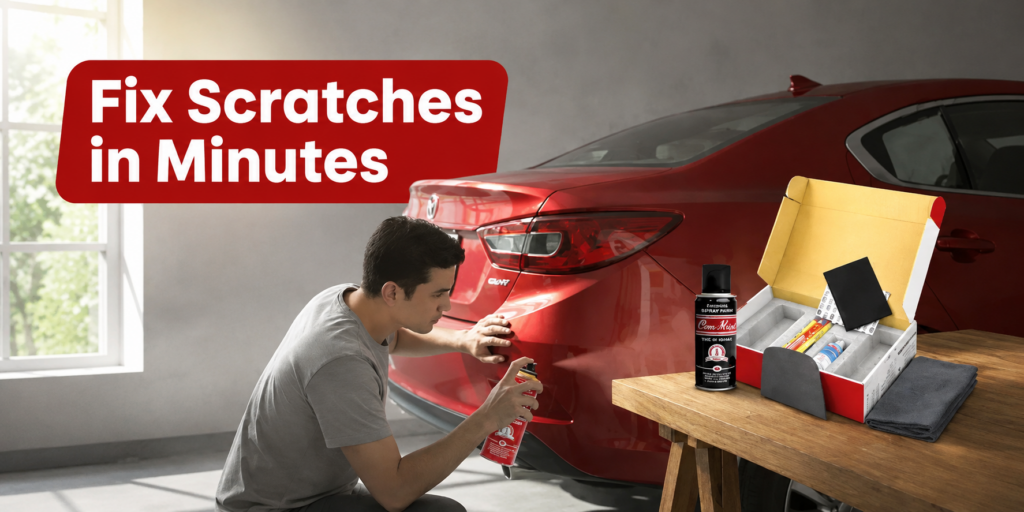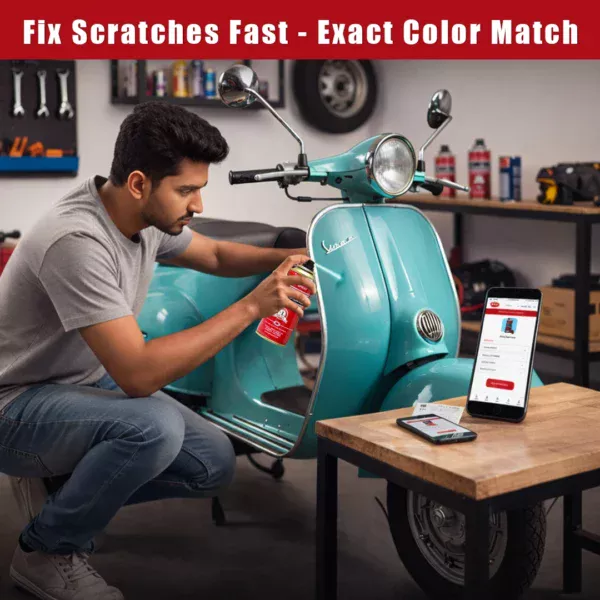
Small scratches, scuffs and paint chips are common on cars, motorcycles and scooters. They can appear while parking, riding through traffic, brushing against branches, or carrying out everyday errands. Even minor damage can affect the vehicle’s appearance and make the paintwork look worn.
Automotive scratch remover paint sprays and touch-up products can help improve the appearance of certain types of paint damage. However, not every scratch needs spray paint. A light surface scuff may respond to a suitable scratch remover, while a mark with missing colour may require colour-matched touch-up paint. Deeper scratches, dents or damaged panels may need professional repair.
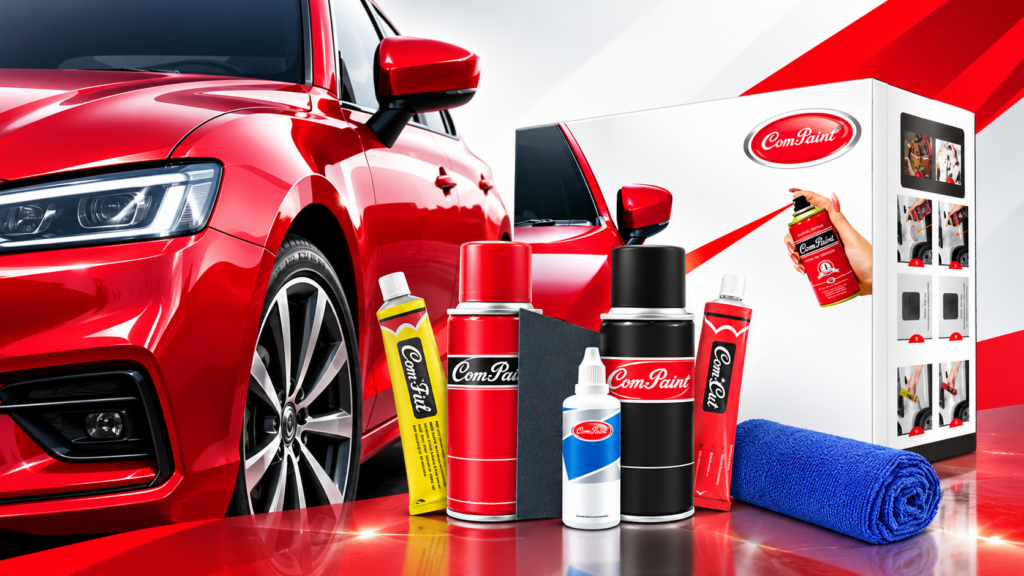
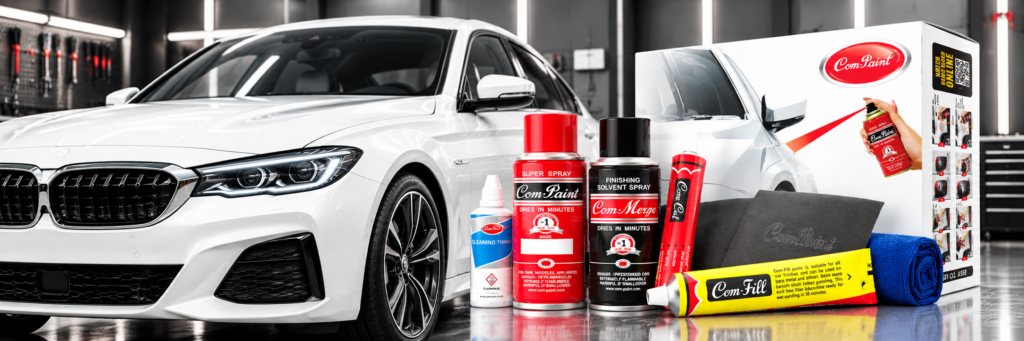
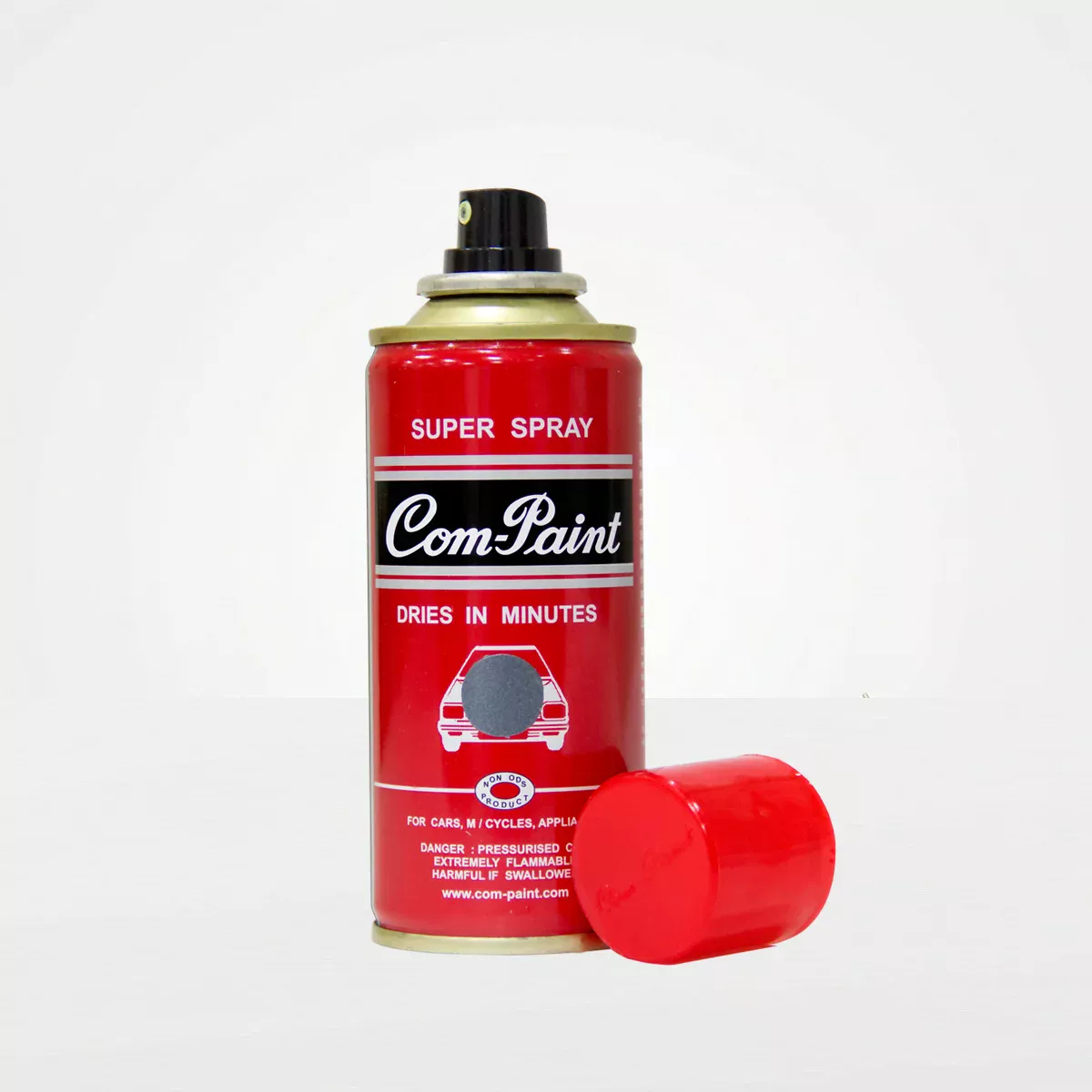
Com-Paint offers automotive touch-up options for cars, motorcycles and scooters, including vehicle-specific spray paints and scratch-repair products. This guide explains how to choose between a car scratch remover spray, car spray paint and bike spray paint, how to prepare the surface, and which mistakes to avoid.
Quick Answer: Which Product Should You Use?
- Light scuff or paint transfer: use a vehicle-safe scratch/scuff remover if the original paint is still intact.
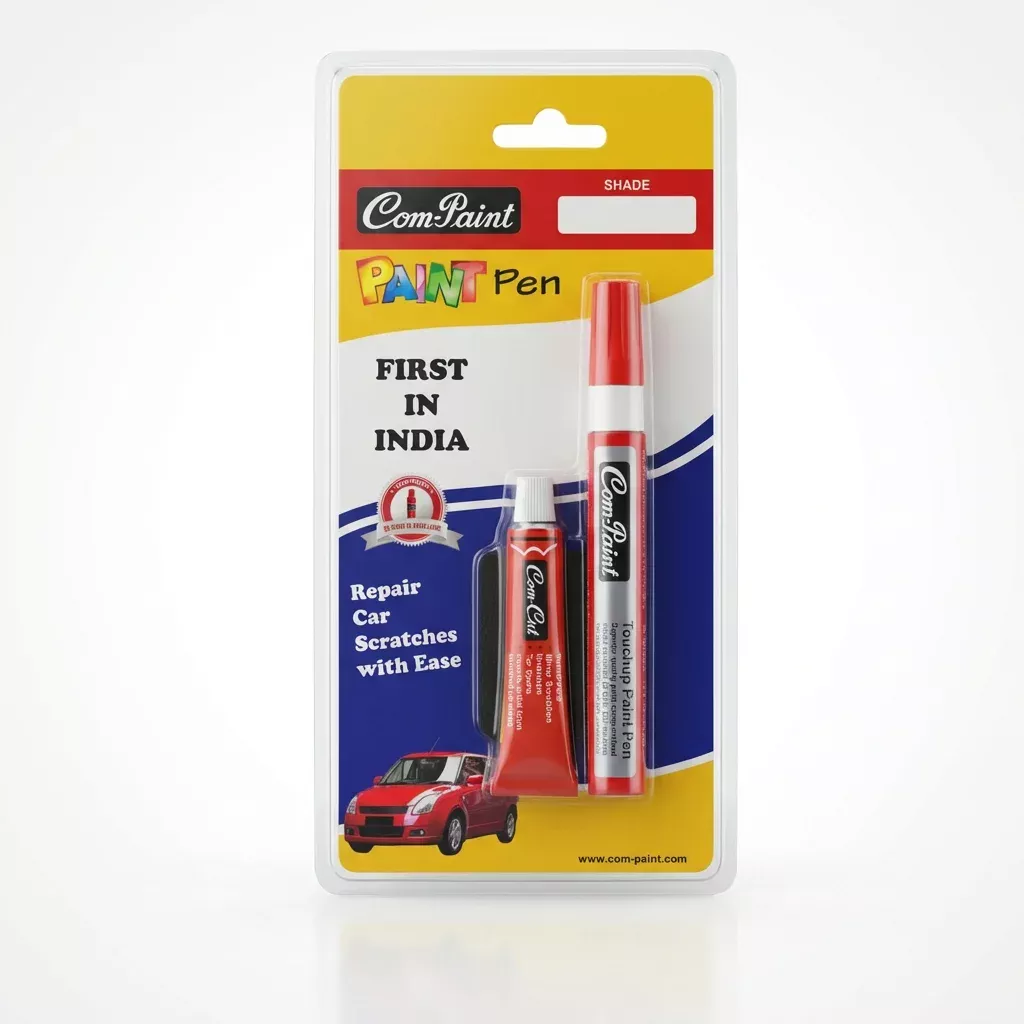
- Tiny paint chip or narrow scratch: consider a precision paint pen or touch-up product in the correct shade.
- Wider area where colour paint is missing: a suitable automotive spray paint may provide more even coverage after correct preparation.
- Scratch with a groove: the repair may require filler, sanding, primer and colour-matched paint, depending on the damage and product system.
- Deep damage, a dent, cracked plastic or exposed metal with corrosion: have the area assessed by a professional.
What Are Automotive Scratch Remover Paint Sprays?
The phrase “automotive scratch remover paint sprays” is used for products people search for when they want to repair visible marks on a vehicle. In practice, it can refer to two different product types: surface-care products that improve the appearance of suitable scuffs, and touch-up spray paints that add colour where the original paint has been damaged.
These products do different jobs. A scratch remover may help reduce the visibility of light surface marks or remove paint transfer, but it cannot replace colour that has been scraped away. Automotive spray paint is used to restore colour to a prepared area. Selecting the right product starts with understanding how deep the scratch is.
Common Types of Vehicle Paint Damage
1. Surface Scuffs and Paint Transfer
A surface scuff can be a mark left by another object rather than a cut through the vehicle’s paint. If the original finish remains intact, a compatible scratch/scuff remover may improve its appearance. Clean the area first and follow the product directions. Avoid aggressive rubbing, which can dull the clear coat.
2. Fine Scratches and Small Chips
Fine scratches and small chips may expose the colour coat’s lower layers or the primer beneath it. A paint pen or precision touch-up applicator can help apply colour to a small spot. The shade and finish should match the vehicle as closely as possible.
3. Deeper Scratches with Missing Paint
When paint is missing, a surface polish or scratch remover will not rebuild the finish. Depending on the scratch, repair may require cleaning, carefully preparing the damaged area, using a suitable filler and primer where required, and applying colour-matched automotive paint. The repair system’s instructions should determine the steps.
4. Scratches on Plastic Bumpers and Bike Panels
Plastic bumpers, motorcycle fairings and scooter panels may need different preparation from metal body panels. Confirm that the chosen product is suitable for the part’s material. Cracks, broken tabs, distortion or large damaged areas should be evaluated before attempting a cosmetic repair.
Car Scratch Remover Spray vs Car Spray Paint
| Product Type | Best For | What It Does | Key Limitation |
| Scratch/scuff remover | Superficial marks and suitable paint transfer | Improves appearance of selected surface marks | Cannot replace missing paint |
| Paint pen | Tiny chips and narrow scratches | Applies colour precisely to a small spot | Less suitable for broad areas |
| Car spray paint | Larger localised areas with paint loss | Adds colour over a properly prepared area | Requires masking, preparation and controlled application |
| Bike spray paint | Suitable motorcycle or scooter touch-ups | Re-colours a compatible prepared surface | Correct shade and substrate compatibility matter |
| Professional refinishing | Deep damage, dents or large panels | Repairs and refinishes complex damage | Usually requires more time and cost |
How to Choose the Right Automotive Spray Paint
- Match the factory colour: check the vehicle paint code where available. A general colour name such as “white”, “red” or “black” may have multiple variants.
- Confirm the make, model and year: vehicle-specific shade selection can help narrow down the right colour option.
- Check the surface material: metal panels and plastic parts may need different preparation or compatible products.
- Select paint made for automotive use: ordinary decorative spray paint is not automatically suitable for vehicle bodywork.
- Consider the damage size: a paint pen is often easier for a tiny chip, while a spray product may suit a wider repair area.
- Read the product instructions: check preparation, application distance, recoat intervals, drying and curing requirements.
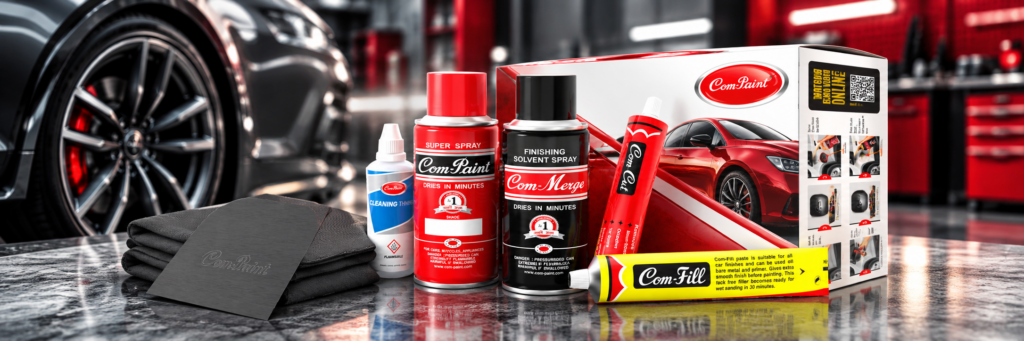
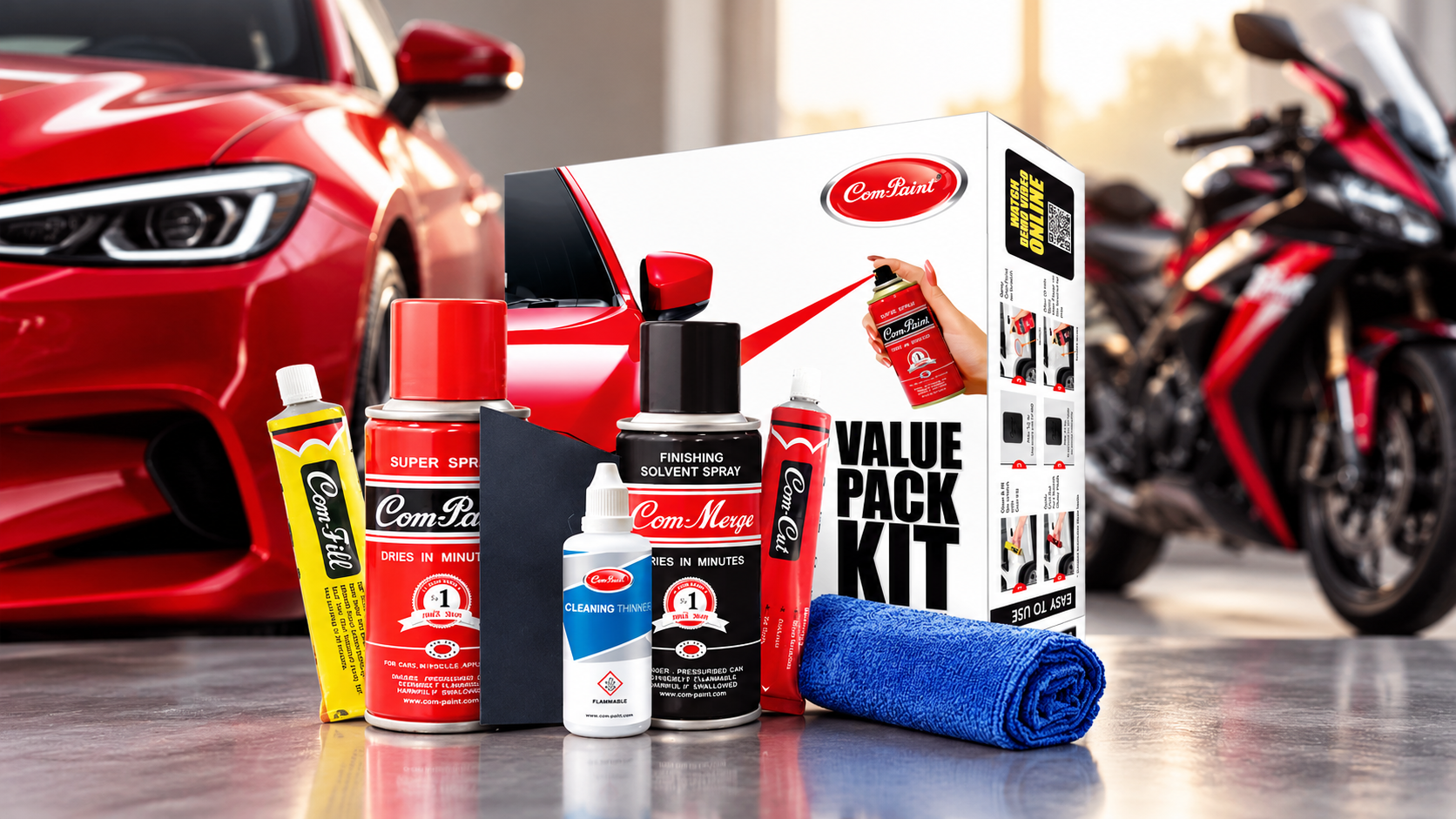
- Check the full kit contents: confirm whether the kit includes paint, filler, finishing products, abrasives or cleaning materials before ordering.
Bike Scratch Paint: What Motorcycle and Scooter Owners Should Know
Bike scratch paint should match the motorcycle or scooter’s original shade and be suitable for the damaged part. Fuel tanks, metal body panels, plastic fairings and trim pieces may have different coating requirements, so do not assume one product is suitable for every component.
Before buying bike spray paint, identify the make, model, year and colour variant. Clean the surface and inspect the damage. If the scratch is only a superficial scuff, a compatible scratch remover may be enough. If the colour has been removed, a touch-up paint or spray paint system may be more appropriate.
For a neat result, use controlled light coats rather than one heavy coat, and allow the recommended drying time between applications. Large areas or highly visible panels can be difficult to blend at home, so professional refinishing may be preferable.
How to Use Car Spray Paint for a Minor Scratch
Step 1: Wash and Dry the Panel
Remove road grime, dust, wax and grease using a vehicle-safe cleaning method. Let the area dry completely. Contamination under paint can affect adhesion and leave an uneven finish.
Step 2: Assess the Scratch
Inspect the mark in bright, indirect light. If it is only surface transfer and the paint underneath is intact, use a suitable scratch/scuff remover according to its label. If colour is missing, select a touch-up paint system.
Step 3: Prepare and Mask the Area
Follow the chosen product’s preparation instructions. For spray painting, mask nearby glass, lamps, trim and adjacent panels to prevent overspray. Use a clean workspace with suitable ventilation and the protective equipment specified on the product label.
Step 4: Use Filler or Primer Only When Needed
A deeper scratch may require a suitable filler or primer, but not every repair needs every product. Avoid sanding aggressively, particularly around sharp panel edges. Follow the recommended repair sequence for the selected paint system.
Step 5: Apply Light, Even Coats
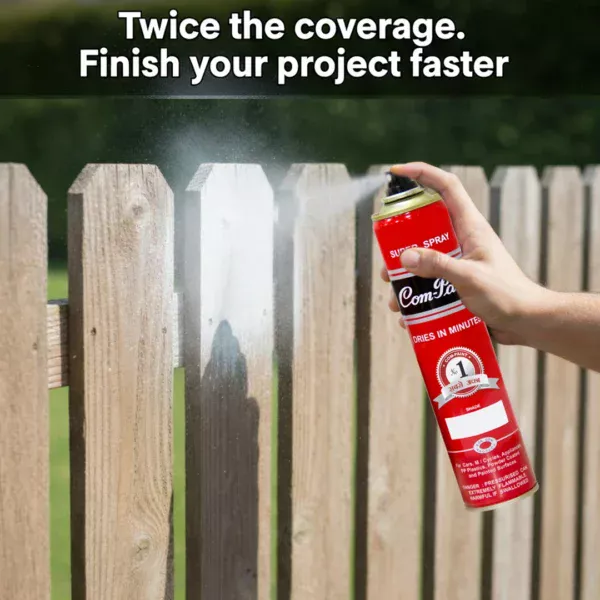
Shake the can as instructed and keep it at the distance specified on the label. Move smoothly across the repair and use light, controlled coats. Heavy application can cause runs, uneven texture or poor curing.
Step 6: Allow Drying and Curing
Dry-to-touch does not necessarily mean fully cured. Temperature, humidity and paint thickness affect drying. Follow the stated recoat and curing times, and avoid washing, waxing or polishing the repair too early.
Step 7: Finish with Compatible Products
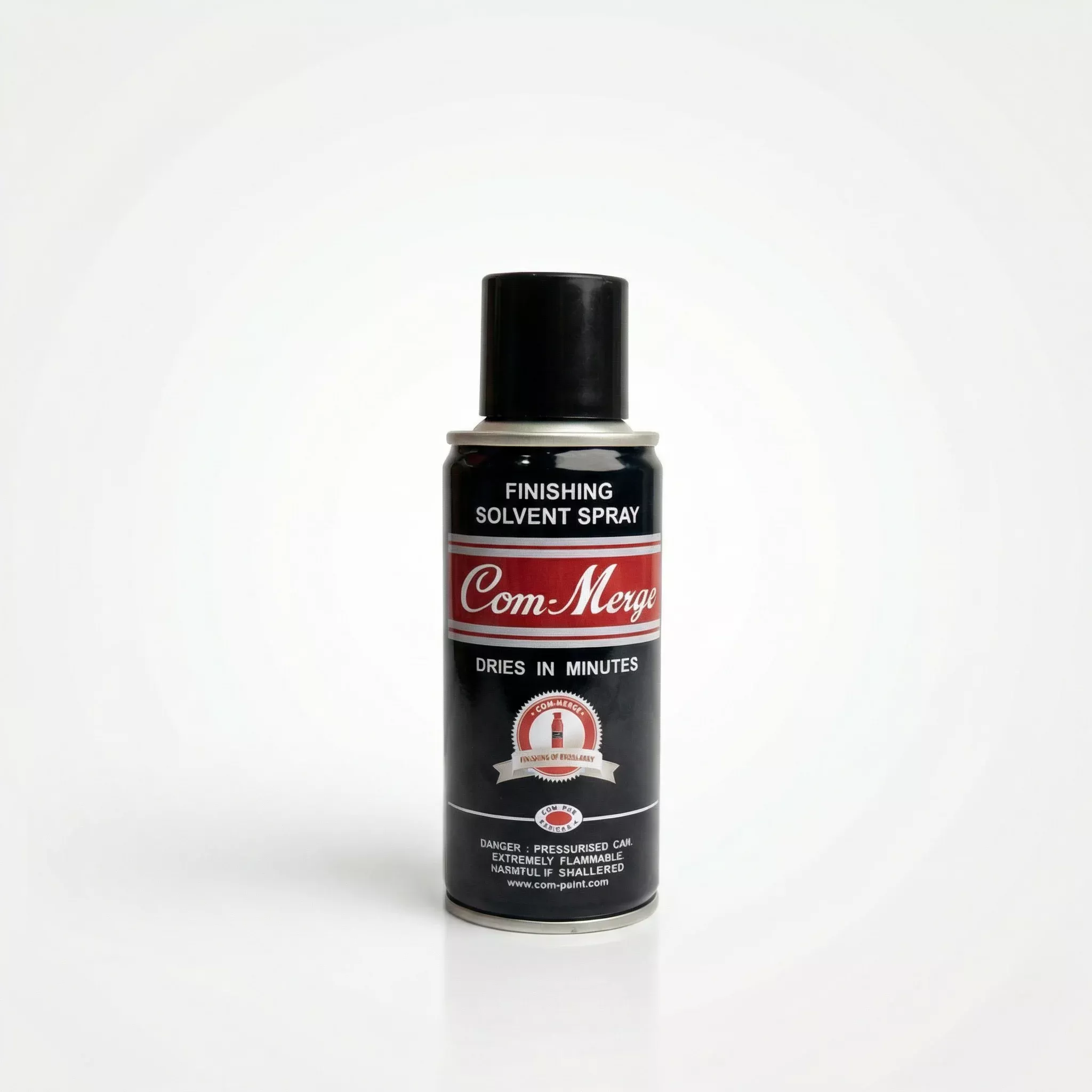
Use a finishing solvent, polishing compound or clear coat only if it is compatible with the paint system and its instructions call for it. If you are unsure about blending the repair, test on a suitable sample surface or consult a professional.
How Com-Paint Can Help with Car and Bike Touch-Ups
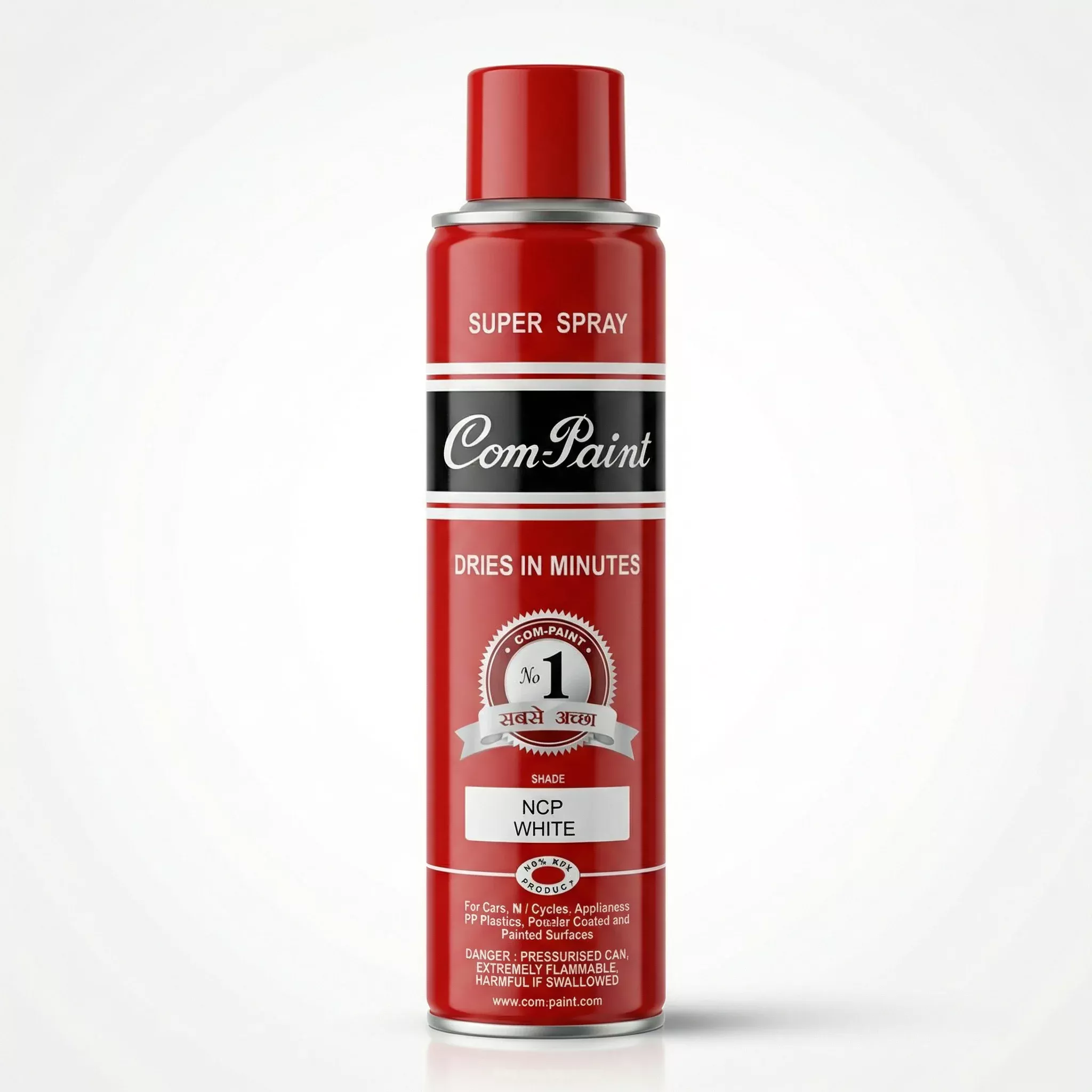
Com-Paint’s official website lists several automotive touch-up options, including a Spray Paint for Cars Value Pack Kit, a Paint Pen Kit for Cars, touch-up spray paint for motorcycles and scooters, scratch filler and finishing products. The car value pack listing describes a kit with colour-matched spray paint and supporting preparation and finishing items. Product selection and kit contents can change, so check the current product page before purchasing.
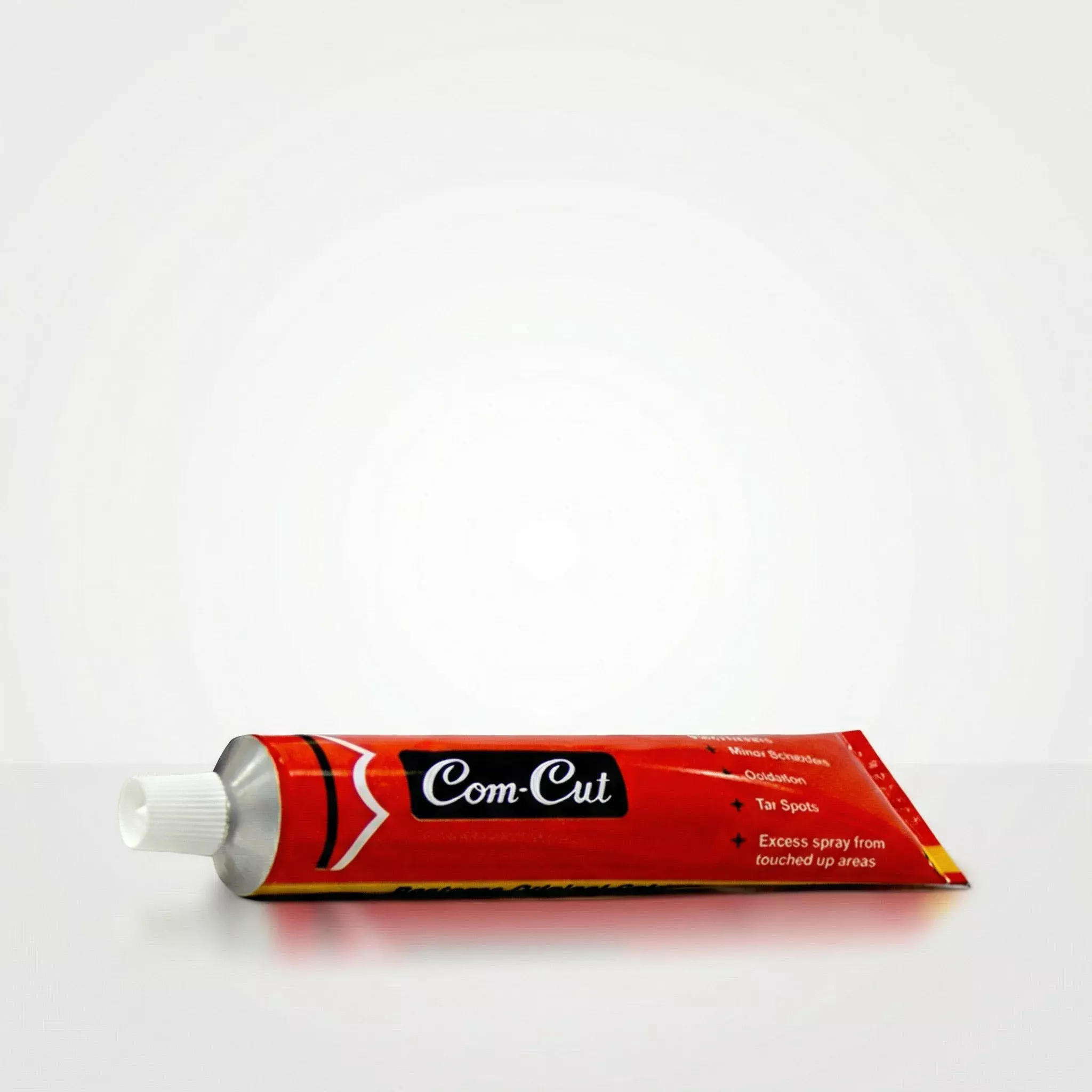
For surface scuffs, Com-Paint also lists a Car & Bike Scratch Remover product intended for light-to-medium surface marks and paint transfer. This type of product should not be confused with paint used to restore colour where the original coating is missing.
To explore the current range, visit the official Com-Paint website: https://www.com-paint.com/
- Com-Paint Home: https://www.com-paint.com/
- Car Scratch Repair Kit: https://www.com-paint.com/scratch-remover-kit/
- Car & Bike Care Solutions: https://www.com-paint.com/product-category/car-care-solutions/
Mistakes to Avoid When Using Automotive Spray Paints
- Choosing a shade based only on a broad colour name instead of checking the vehicle-specific code.
- Expecting a scratch remover to repair a deep groove or replace missing paint.
- Painting over dirt, wax, grease, moisture or loose coating.
- Spraying too close to the panel or applying a thick coat in one pass.
- Failing to mask nearby glass, trim and panels.
- Combining products that are not designed to work together.
- Touching, washing, waxing or polishing the surface before it has cured.
- Attempting a large repair without the right equipment, ventilation or experience.
Safety Tips for Car Spray Paint and Bike Spray Paint
Aerosol paints and solvents must be handled carefully. Read the product label and safety information before use. Work in a well-ventilated location, keep the product away from flames, sparks and heat, and use the protective equipment recommended by the manufacturer. Avoid breathing spray mist and prevent contact with eyes and skin. Do not puncture or burn aerosol cans. If you cannot provide a suitable workspace or protective equipment, use a professional repair service.
Frequently Asked Questions
What are automotive scratch remover paint sprays used for?
The term can refer to surface-care products for suitable scuffs and paint transfer, or touch-up spray paints used to restore colour where paint is missing. Check the product’s intended use before applying it.
Can car scratch remover spray fix deep scratches?
A surface scratch remover cannot replace paint that has been removed. Deep scratches may need preparation, filler or primer where appropriate, colour-matched paint, or professional refinishing.
What is the best bike scratch paint?
The best bike scratch paint is compatible with the damaged part and matches the motorcycle or scooter’s original colour and finish. Check the make, model, year and paint code where available.
Can I use car spray paint on a motorcycle?
Only use it if the product is suitable for the motorcycle part’s material and intended application. Shade matching, surface preparation and product compatibility are essential.
What is the difference between car scratch remover spray and car spray paint?
A scratch remover is intended for suitable superficial marks or paint transfer. Car spray paint adds colour to a prepared area where the original paint is missing.
How do I find the correct car spray paint colour?
Use the vehicle’s paint code where available, or a reliable vehicle-specific selection process based on make, model and year. A general colour name may not identify the exact variant.
Can I repair a car scratch at home?
Small scuffs, chips and localised paint damage can sometimes be improved at home with suitable products and careful preparation. Deep dents, corrosion, cracked parts and large damaged areas are better assessed by a professional.
How many coats of automotive spray paint should I apply?
The correct number of coats depends on the product, colour, surface and application conditions. Follow the manufacturer’s instructions and prefer controlled light coats over one heavy coat.
Does car spray paint remove a scratch?
No. Spray paint does not remove the physical scratch. It restores colour to a properly prepared area where paint is missing. A surface scuff may be better suited to a scratch remover.
Where can I buy car spray paint and bike spray paint online in India?
You can review vehicle-specific touch-up spray paints and scratch-repair products on the official Com-Paint website at https://www.com-paint.com/. Check the current listing for shade availability and product details.
Conclusion
Choosing automotive scratch remover paint sprays begins with identifying the type of damage. A surface scuff may need only a suitable scratch remover, while missing colour may require a precision touch-up product or automotive spray paint. For motorcycles and scooters, choose bike scratch paint that matches the vehicle and is compatible with the affected panel.
Before buying car scratch remover spray, car spray paint or bike spray paint, compare the product’s purpose, shade-matching method, surface compatibility and instructions. Com-Paint offers a range of automotive touch-up and scratch-care options to help vehicle owners explore a repair approach suited to their needs.