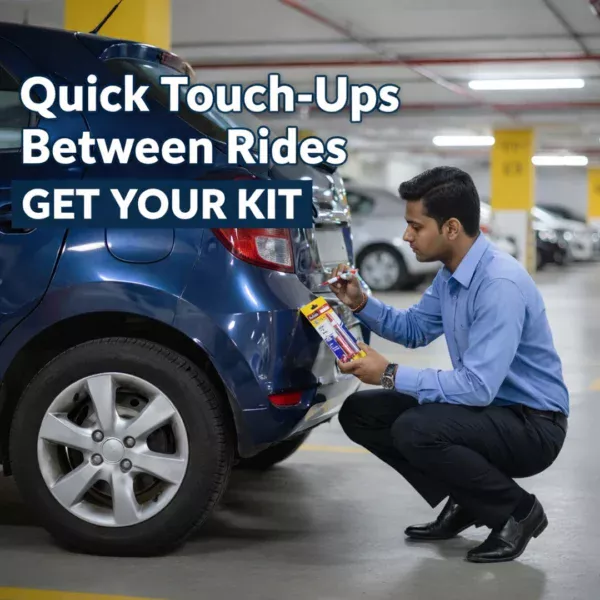
A scratch on your car or bike can make an otherwise well-maintained vehicle look older than it is. Scratches can happen while parking, riding through narrow streets, brushing against branches, or dealing with everyday road use. The good news is that many minor marks can be improved at home when you identify the type of damage and choose the right product.
The best scratch repair product for cars and bikes is not necessarily one product for every situation. A surface scuff may respond to a suitable scratch remover, while a small chip or a scratch that has removed paint may need a colour-matched touch-up product. Larger paint-damaged areas may be better suited to automotive spray paints, and deep dents or extensive damage usually call for professional repair.
This guide explains how to identify scratch depth, compare car scratch remover spray and touch-up paint, choose bike scratch paint, and apply a repair product more carefully. Com-Paint offers automotive touch-up options, including scratch-care products and vehicle-specific spray paint solutions. Always check the individual product instructions and compatibility before use.
Which Scratch Repair Product Should You Choose?
- Light scuffs or paint transfer: try a product specifically designed for surface marks, after testing it on a small area.
- Tiny chips or narrow scratches: consider a precision touch-up pen or suitable touch-up paint.
- A scratch with a groove or missing paint: a compatible filler, primer and colour-matched paint system may be required.
- A wider area of missing paint: automotive car spray paint or bike spray paint may provide more even coverage when the shade and surface preparation are correct.
- Deep dents, cracked panels, widespread damage or exposed metal with corrosion: consult a professional body or paint technician.
Why Choosing the Right Scratch Repair Product Matters
Vehicle finishes are built in layers, which may include a substrate, primer, colour coat and clear coat. A scratch that affects only the surface is different from one that cuts through the colour layer. Applying paint to a mark that only needs cleaning may be unnecessary; using a surface cleaner on missing paint, however, will not rebuild the damaged coating.
Choosing the right method can help avoid uneven colour, visible edges, excess product and unnecessary expense. Before buying a product, inspect the scratch in bright, indirect light, clean the area gently, and check whether the original colour is still present. If you can see primer, bare metal or a different substrate, plan for a paint repair rather than relying on a surface scratch remover alone.
Understand the Different Types of Car and Bike Scratches
1. Surface Scuffs and Paint Transfer
A light scuff may be residue from another painted object or a mark on the surface of the finish. If the original paint underneath remains intact, a vehicle-safe scratch or scuff remover may improve its appearance. Follow the label directions and avoid aggressive rubbing, which can dull or damage the clear coat.
2. Fine Scratches and Small Paint Chips
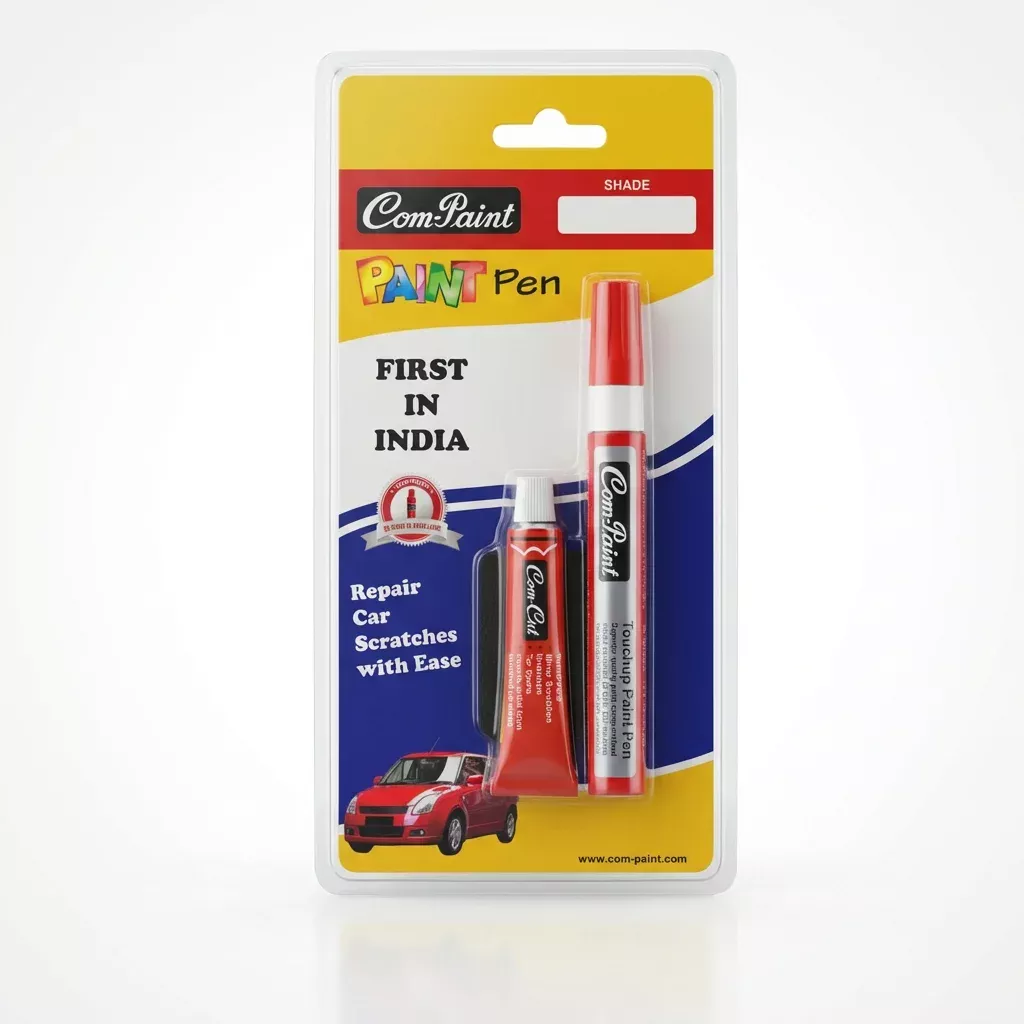
A narrow scratch or tiny chip may expose a different layer beneath the top finish. A touch-up pen or precision applicator can help place a small amount of paint exactly where it is needed. The most important step is selecting the correct vehicle shade and finish.
3. Deep Scratches and Grooves
If the scratch has a noticeable groove or missing paint, a scratch remover alone is unlikely to restore the original finish. Depending on the damage, the repair may require cleaning, suitable filler, sanding, primer, colour-matched paint and a compatible clear coat. Follow the product system in the stated order.
4. Scratches on Plastic Bumpers and Bike Panels
Bumpers, fairings and other plastic parts may need a different preparation method from metal body panels. Confirm that the product is suitable for the specific substrate. Cracked plastic, broken clips, distorted panels and deep damage should be assessed before painting.
Types of Scratch Repair Products: What Does Each One Do?
Car and Bike Scratch Remover
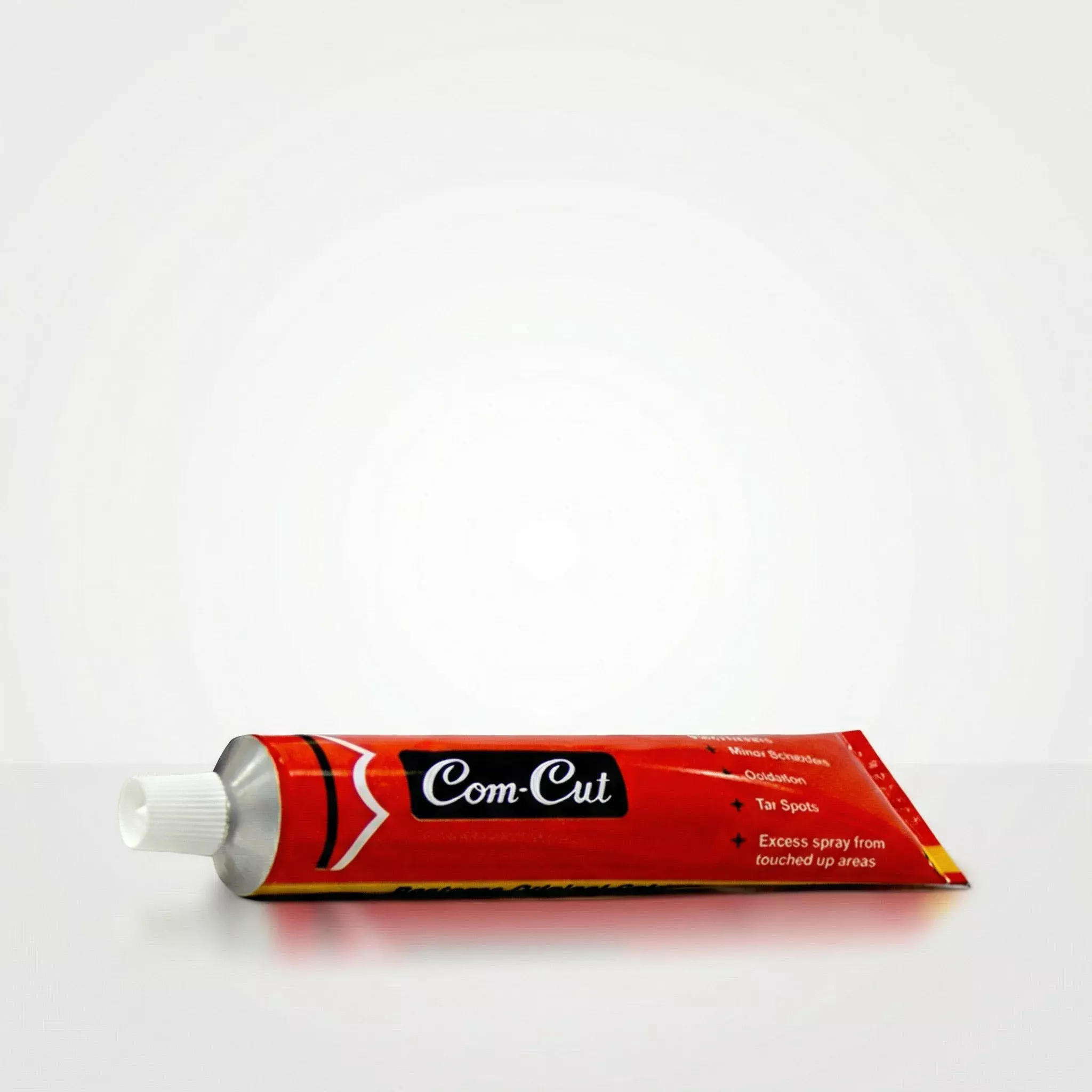
A car and bike scratch remover is intended for suitable surface marks, light scuffs or paint transfer. It is useful when the goal is to improve a mark without repainting. Com-Paint lists its Car & Bike Scratch Remover (Ragad Chhoomantar) for surface marks and paint transfer. It is not a substitute for paint where the coating has been removed.
Car Scratch Remover Spray
People often search for a car scratch remover spray when they want a quick DIY fix. However, products sold under similar search terms may work in different ways: some are surface-care products, while others are touch-up paints or coating products. Read the product description to understand whether it removes surface residue, adds colour, fills a scratch or protects the finish. No spray can reliably make every deep scratch disappear.
Bike Scratch Paint and Bike Spray Paint
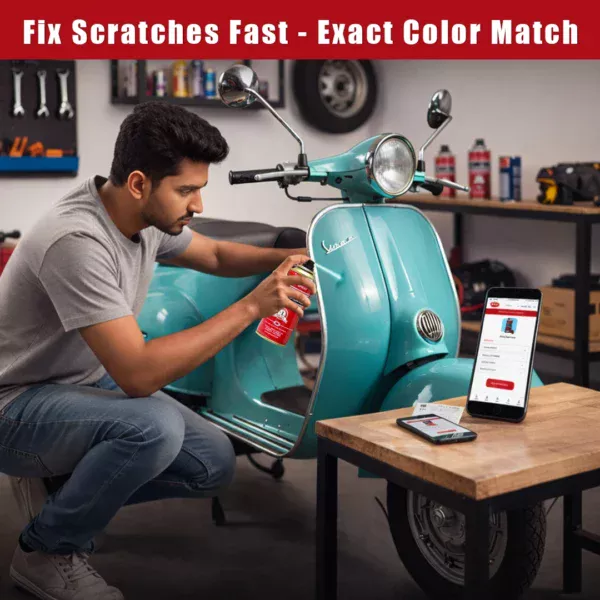
Bike scratch paint is useful when a motorcycle or scooter has lost colour in a small area. A vehicle-specific bike spray paint can be practical for suitable repair areas that are too broad for a tiny applicator. Match the make, model, year and paint shade as closely as possible, and check whether the panel is metal or plastic.
Car Spray Paint
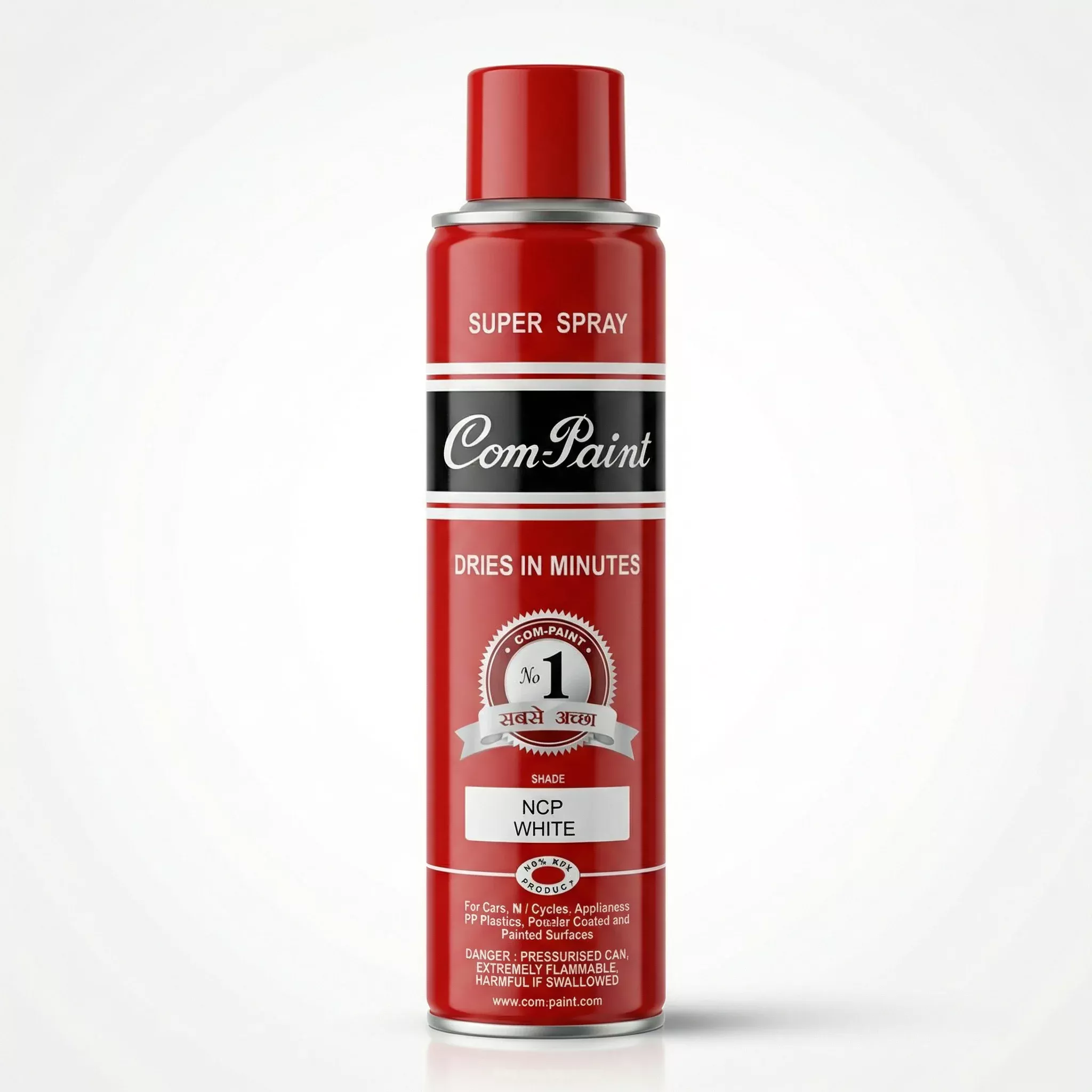
Car spray paint is generally more suitable than a pen for a wider area of paint loss, provided the paint is designed for automotive use and compatible with the existing finish. A vehicle-specific colour match can help the repair blend better, although colour and gloss can still vary with paint age, sunlight exposure, application technique and curing.
Scratch Filler, Primer and Clear Coat
A suitable filler may help level a small groove before repainting. Scratch Repair Product for Cars & Bikes Primer may be needed where the original coating has been removed or where the repair system calls for it. A compatible clear coat can provide the intended gloss and protection when required by the product system. Not every scratch needs every step; follow the instructions for the exact products being used.
How to Choose the Best Scratch Repair Product for Cars & Bikes
- Assess the depth: determine whether the mark is surface residue, a clear-coat scratch, missing colour paint or deep damage.
- Confirm the vehicle shade: use the manufacturer paint code or a reliable make/model/year matching process. A generic name such as “black” or “silver” may not be precise enough.
- Check the surface material: metal panels, plastic bumpers and motorcycle fairings may have different preparation needs.
- Choose an automotive-specific product: ordinary decorative spray paint is not automatically suitable for vehicle bodywork.
- Read the complete instructions: confirm preparation, application distance, recoat intervals, drying and curing times.
- Consider the repair area: a pen suits tiny chips; spray paint may be more appropriate for a wider area; deep or highly visible repairs may need a professional.
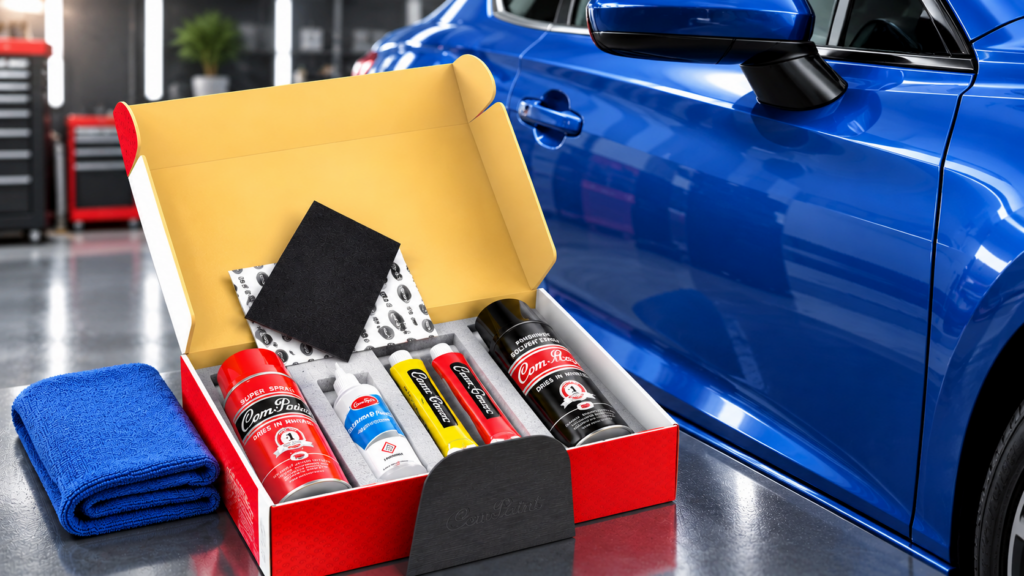
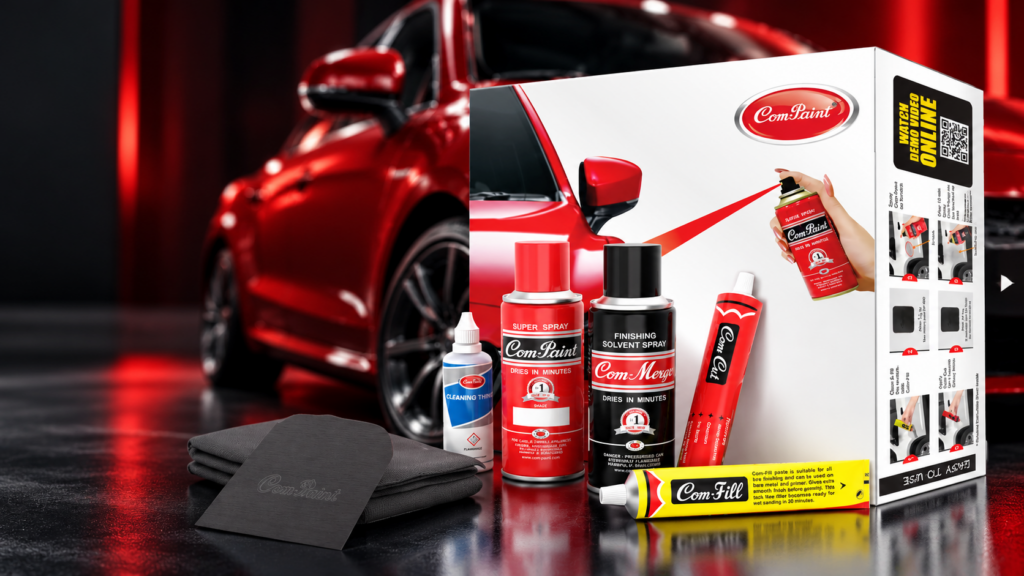
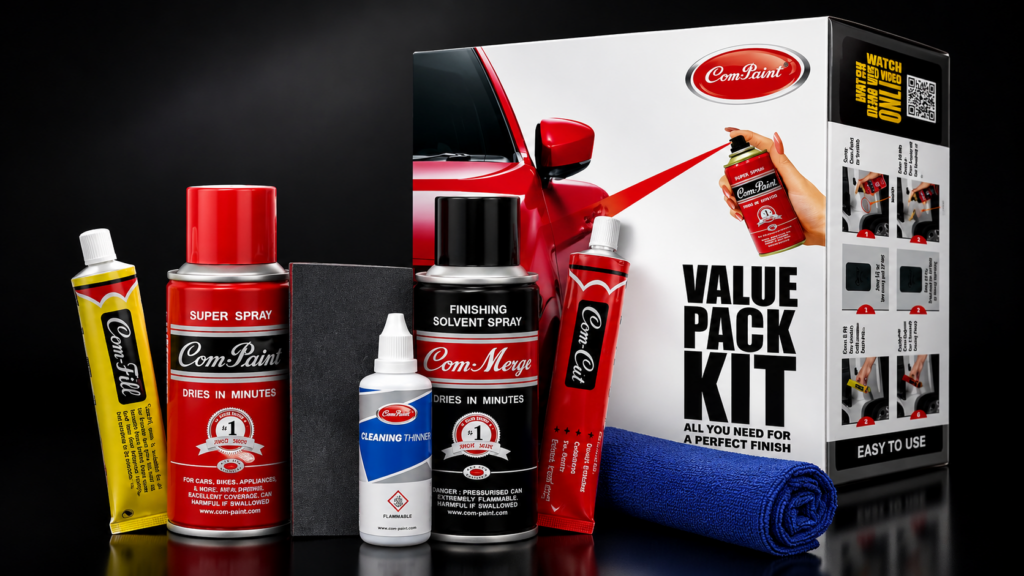
- Review the kit contents: a repair kit may include colour paint, filler, finishing products, abrasives or cleaning supplies. Confirm what is actually included before ordering.
How to Repair a Minor Car Scratch at Home
Step 1: Wash and Dry the Area
Clean the damaged panel using a vehicle-safe wash method. Remove dust, mud, wax and grease, then let the surface dry fully. Painting over contamination can cause poor adhesion or an uneven finish.
Step 2: Inspect the Scratch
Check the mark in good lighting. If it is surface transfer and the original paint is intact, a suitable scratch remover may be enough. If paint is missing, select a touch-up paint system instead.
Step 3: Mask the Surrounding Area
For spray work, protect adjacent panels, glass, lamps, trim and other parts from overspray. Use appropriate automotive masking materials. Work in a clean, well-ventilated location and follow the safety information on the label.
Step 4: Prepare the Damaged Surface
For deeper paint damage, remove loose material and prepare the surface only as directed by the product instructions. Use filler or primer only when the chosen repair system requires it. Do not sand aggressively, particularly on edges and high-visibility panels.
Step 5: Apply the Correct Product in Controlled Layers
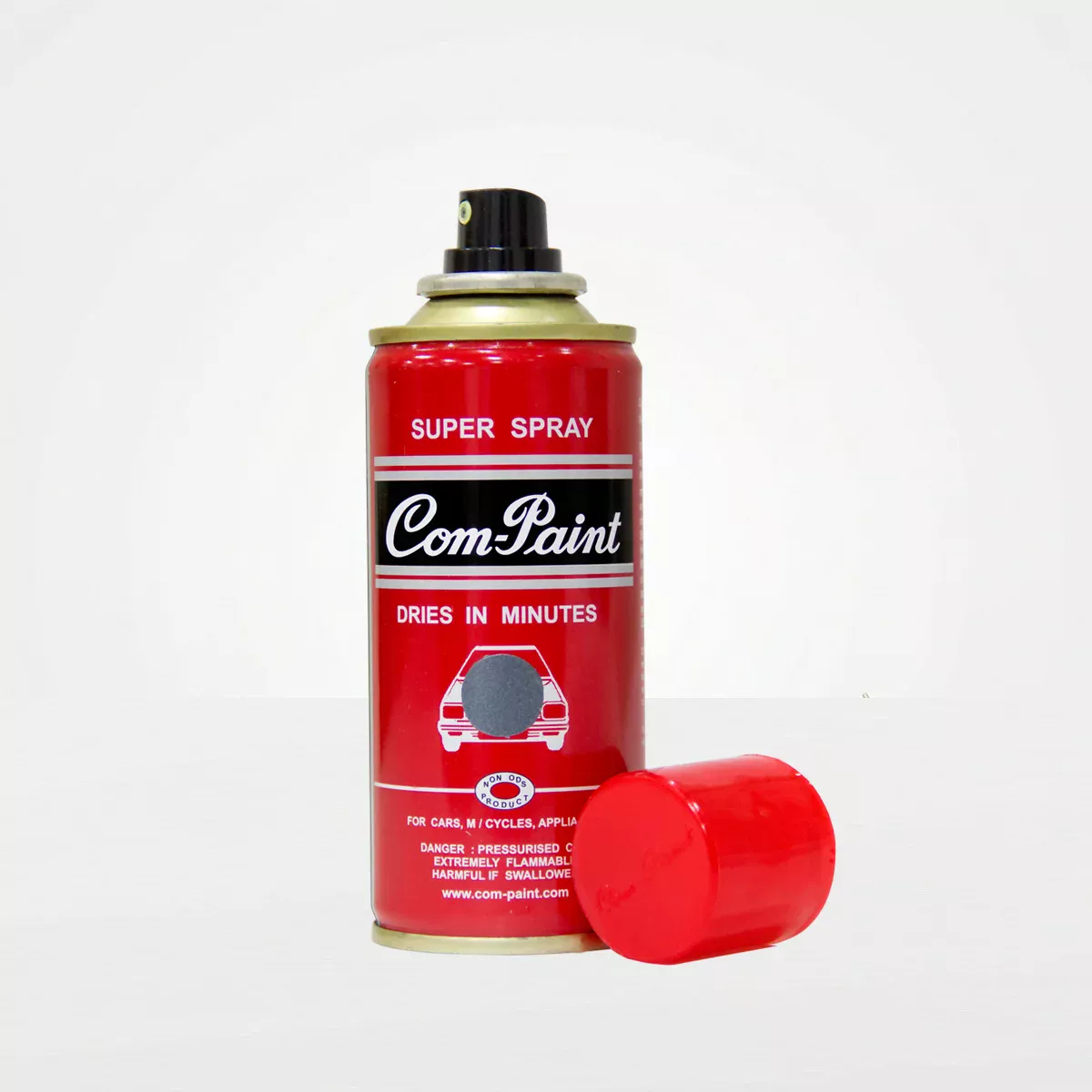
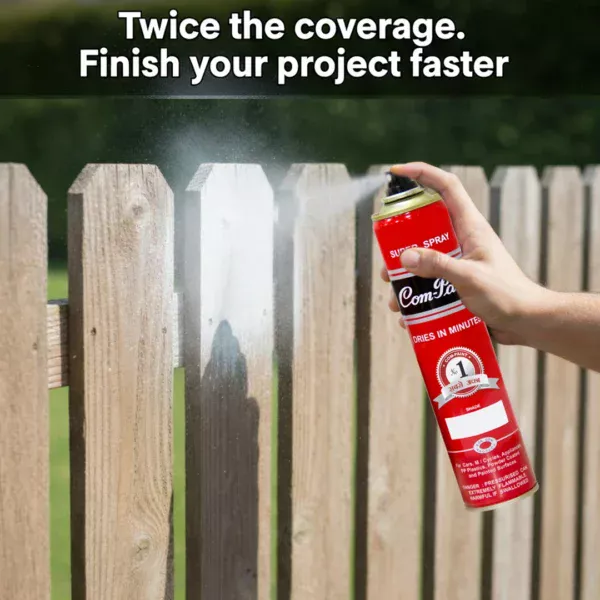
Shake the can as directed and apply light, even coats from the distance stated on the label. Avoid applying one heavy coat, which can cause runs or sagging. Com-Paint’s bike/scooter spray instructions advise holding the can straight and around 25 cm from the surface, using light coats and waiting between coats; always follow the instructions supplied with your particular product.
Step 6: Allow Drying and Curing
Dry-to-touch does not always mean fully cured. Avoid touching, washing, waxing or polishing the repair until the stated curing period has passed. Temperature, humidity and film thickness can affect drying.
Step 7: Finish Carefully
Use only compatible finishing products and follow the recommended order. If you are unsure about blending or polishing, practise on a test surface or ask a professional. A repair on a large, flat or highly visible panel can be harder to blend than a small chip.
Car Scratch Remover vs Car Spray Paint: Key Differences
| Product | Best suited for | Main purpose | Important limitation |
| Scratch/scuff remover | Surface marks and suitable paint transfer | Improve the appearance of superficial marks | Cannot replace missing paint |
| Touch-up pen | Tiny chips and narrow scratches | Apply colour precisely to a small spot | May not blend well over a broad area |
| Filler + touch-up paint | Small grooves or paint-loss areas | Level and recolour a prepared scratch | Needs correct preparation and compatible materials |
| Automotive spray paint | Suitable wider areas of missing paint | Apply colour more evenly over an area | Requires masking, ventilation and careful technique |
| Professional body repair | Deep dents, cracked parts or major damage | Repair the substrate and refinish the panel | May cost more but is appropriate for complex damage |
Why Consider Com-Paint for DIY Scratch Repair?
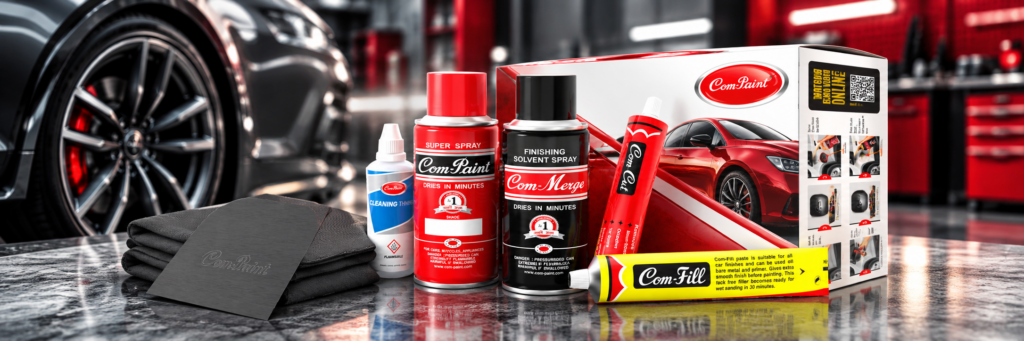
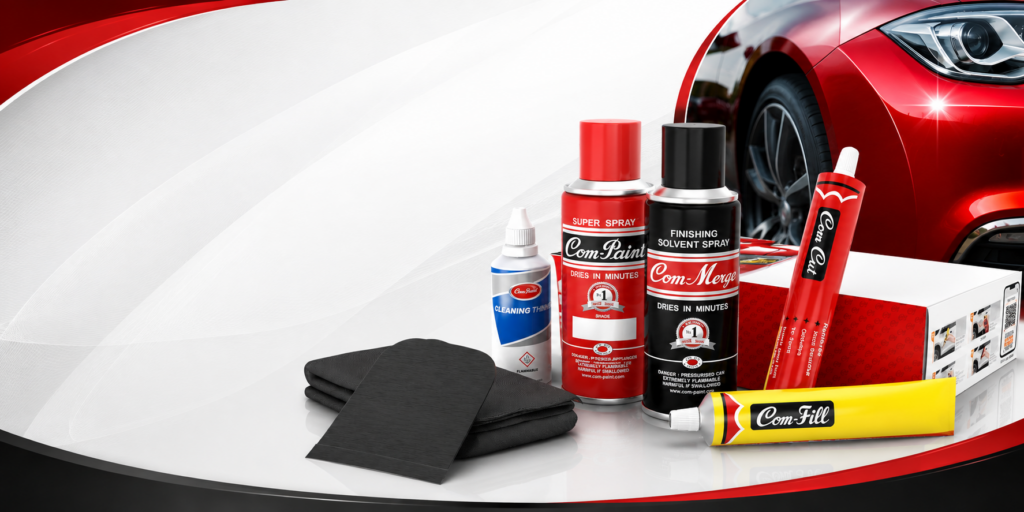
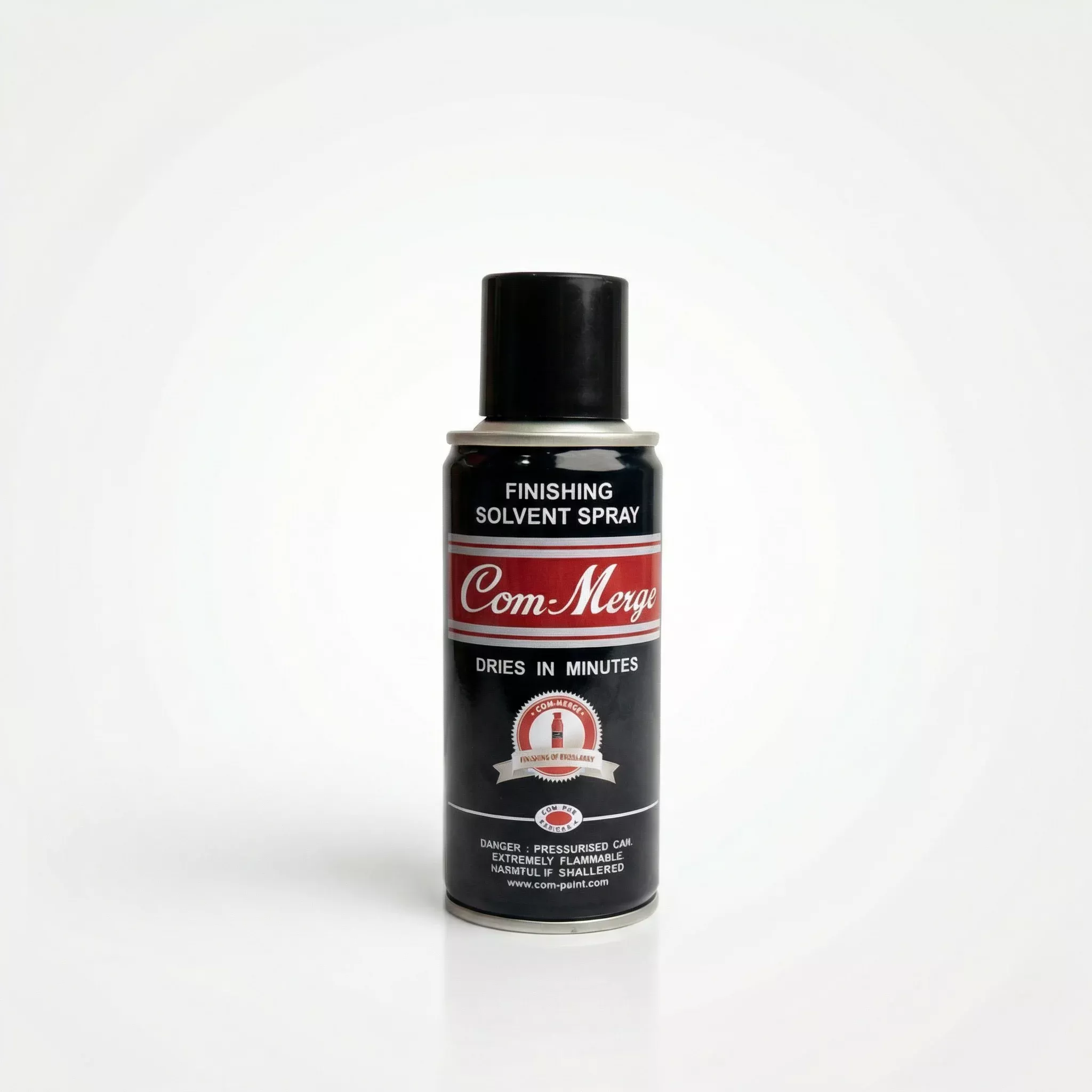
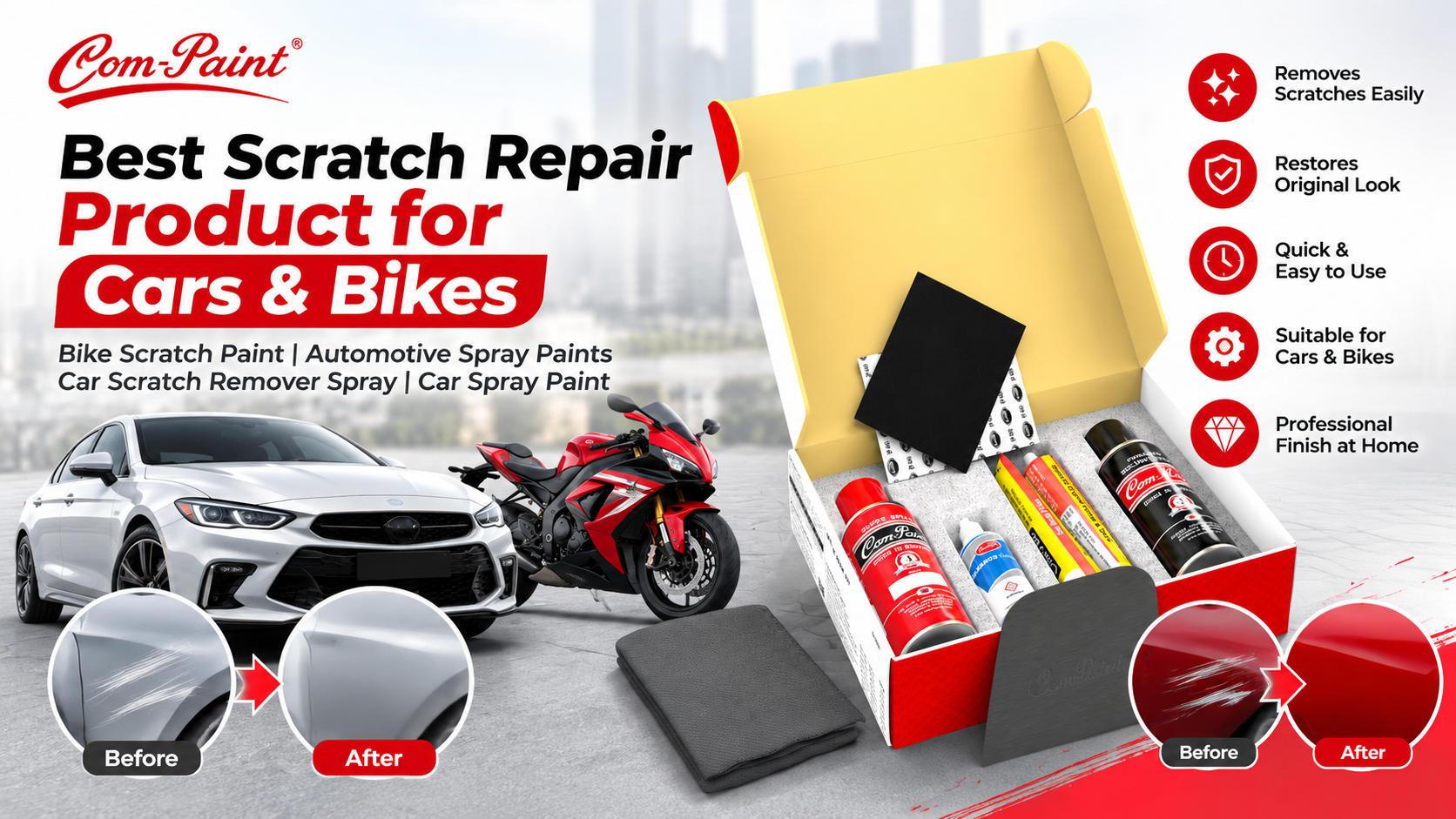
Com-Paint’s website offers several approaches for vehicle touch-ups, including a car and bike scratch remover, scratch filler, paint pen kits and vehicle-specific spray paint/value-pack solutions. Its car scratch repair kit listing describes a system that includes colour-matched spray paint and supporting preparation and finishing items. The website also provides a vehicle selection process to help customers identify the appropriate shade.
For a small surface scuff, a scratch-care product may be the simplest starting point. For missing paint, explore a suitable touch-up paint or spray-paint system instead. Check the current product page for availability, kit contents, vehicle compatibility, price and the latest instructions before ordering.
Explore the options on the official website: https://www.com-paint.com/
Common Mistakes to Avoid During Scratch Repair
- Buying paint based only on a general colour name instead of confirming the vehicle shade.
- Using a surface scratch remover on a deep scratch where paint is missing.
- Applying paint over dust, wax, grease, moisture or loose paint.
- Spraying too close to the panel or applying a heavy coat in one pass.
- Skipping masking and allowing overspray onto glass, trim or nearby panels.
- Mixing products that are not designed to work together.
- Washing, waxing or polishing the area before the coating has cured.
- Attempting a complex repair on a large or highly visible panel without the right experience.
Safety Tips for Automotive Spray Paints
Aerosol paints and solvents should be handled carefully. Read the product label and safety data, work in a well-ventilated area, keep away from flames, sparks and heat, and use the protective equipment recommended by the manufacturer. Avoid inhaling spray mist and prevent contact with eyes and skin. Do not puncture or burn aerosol cans, and store them according to the label. If you cannot provide a suitable workspace or protective equipment, have the repair completed by a professional.
Frequently Asked Questions (AEO-Friendly FAQs)
What is the best scratch repair product for cars and bikes?
The best product depends on the scratch. Use a suitable scratch remover for superficial marks, a touch-up pen for tiny chips, and colour-matched touch-up paint or automotive spray paint when paint is missing. Deep dents or extensive damage may require professional repair.
Does car scratch remover spray remove deep scratches?
A surface scratch remover cannot replace paint that has been removed. Deep scratches may need surface preparation, filler where appropriate, primer and colour-matched paint, or professional refinishing.
Which bike scratch paint should I buy?
Choose bike scratch paint that matches the motorcycle or scooter shade and is compatible with the damaged part. Confirm the model, year, paint code where available, surface material and finish before ordering.
Can I use car spray paint on a bike?
Only use a spray paint if the manufacturer confirms that it is suitable for the bike’s surface and the intended application. Correct shade matching and preparation are important for a consistent finish.
What is the difference between a scratch remover and touch-up paint?
A scratch remover is intended for suitable surface marks and paint transfer. Touch-up paint adds colour where the original paint is missing. They serve different purposes and are not interchangeable.
How do I find the correct car spray paint colour?
Check the vehicle manufacturer’s paint code or use a reliable vehicle-specific shade matching process based on make, model and year. The same broad colour name can have several variants.
Can I repair car scratches at home?
Many small scuffs, chips and minor paint scratches can be improved at home with the correct product, preparation and careful application. Deep dents, cracked panels, corrosion and large paint-loss areas are better assessed by a professional.
How long does automotive spray paint take to dry?
Drying and full curing times vary by product, coat thickness, temperature and humidity. Follow the label for recoat intervals and curing time, and do not assume that a dry surface is fully cured.
Is ordinary spray paint suitable for car bodywork?
Not necessarily. Choose a product designed for automotive use and compatible with the surface and existing coating. Decorative spray paint may not provide the required adhesion, finish or durability.
Does Com-Paint offer scratch repair products for cars and bikes?
Com-Paint lists car and bike scratch-care products as well as vehicle-specific spray paint and touch-up options. Check the official product pages for current details, compatibility, pricing and kit contents.
Conclusion: Choose the Right Repair for the Scratch
The best scratch repair product for cars and bikes is the one that matches the type and depth of damage. Start by checking whether the mark is a surface scuff or actual paint loss. Use a suitable scratch remover for superficial marks, a precision touch-up product for tiny chips, and compatible bike spray paint or car spray paint when a larger area needs colour restoration. For deeper or complex damage, professional repair is often the safer route. If you are comparing automotive spray paints, bike scratch paint or car scratch remover spray, review the product’s intended use, shade-matching process, instructions and safety guidance before purchase. Visit Com-Paint to explore available car and bike touch-up solutions.