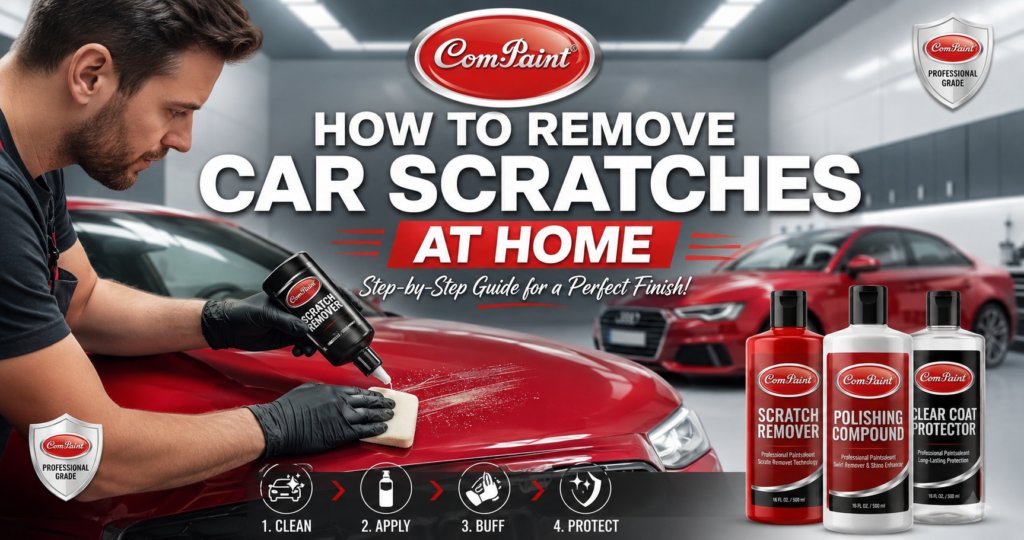
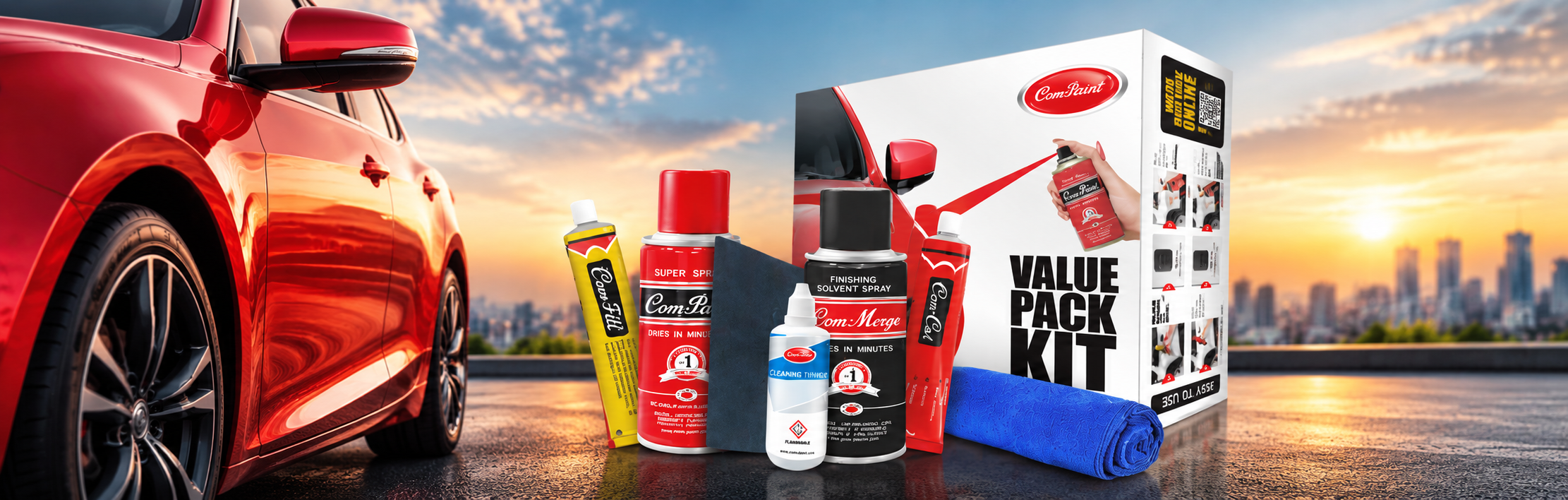
The right scratch repair product depends on how deep the scratch is. For light scuffs, paint transfer and surface marks, a dedicated scratch remover can be enough. For very small chips and narrow scratches, a car scratch remover pen or paint pen can be convenient. When the scratch has removed the paint layer or exposed primer/metal, a touch-up paint system or car/bike spray paint may be more suitable. Deep dents, cracked panels and extensive paint damage generally require professional body repair.
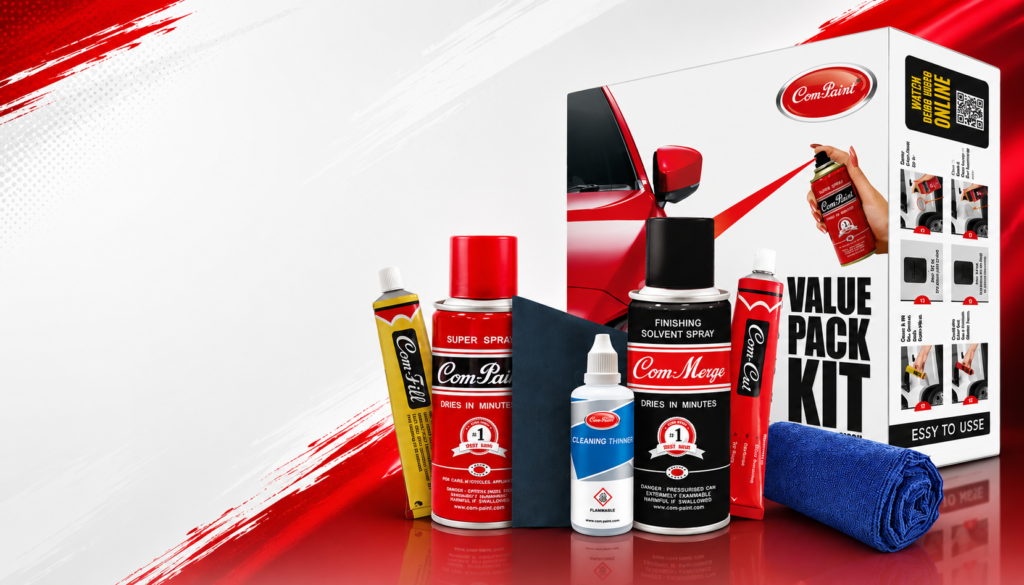
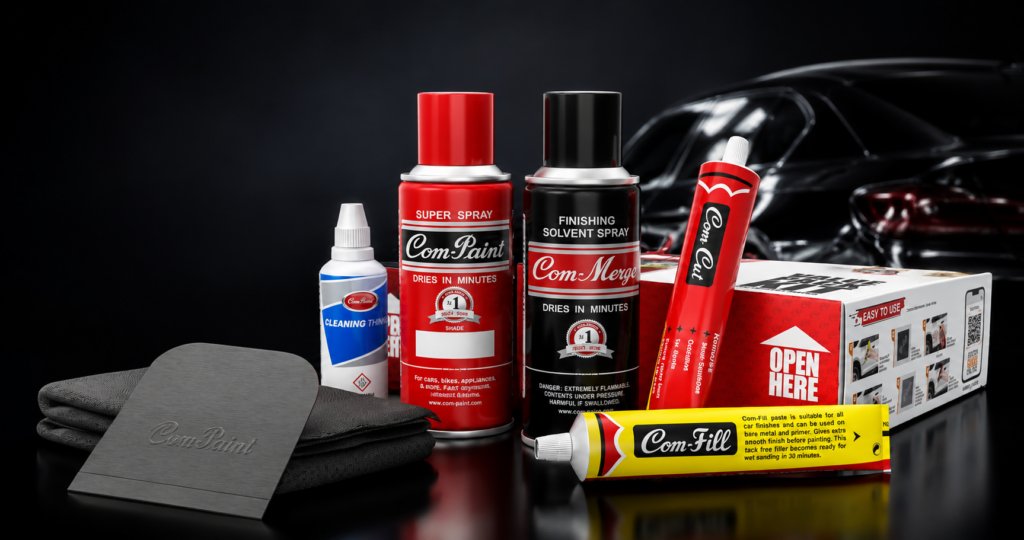
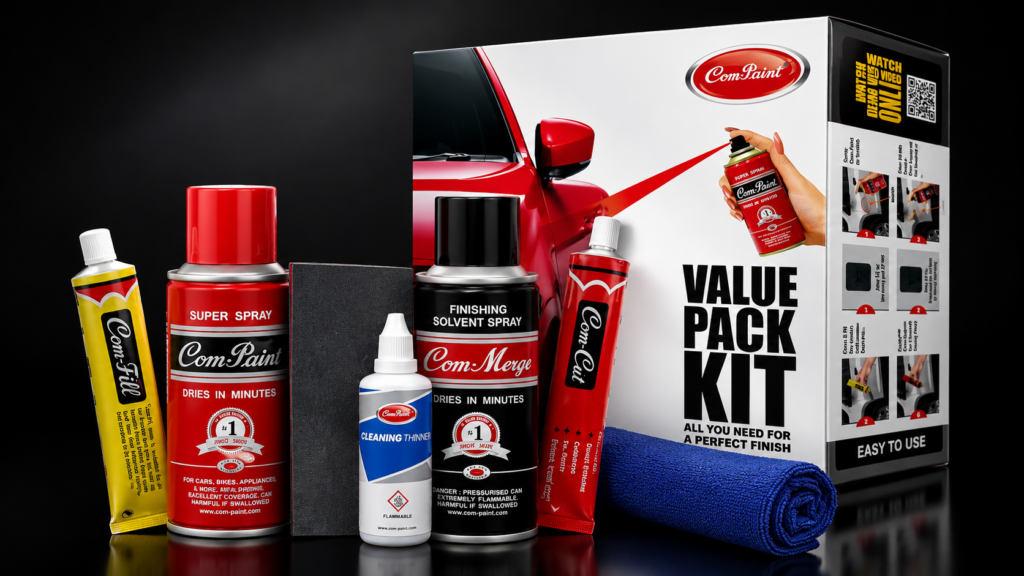
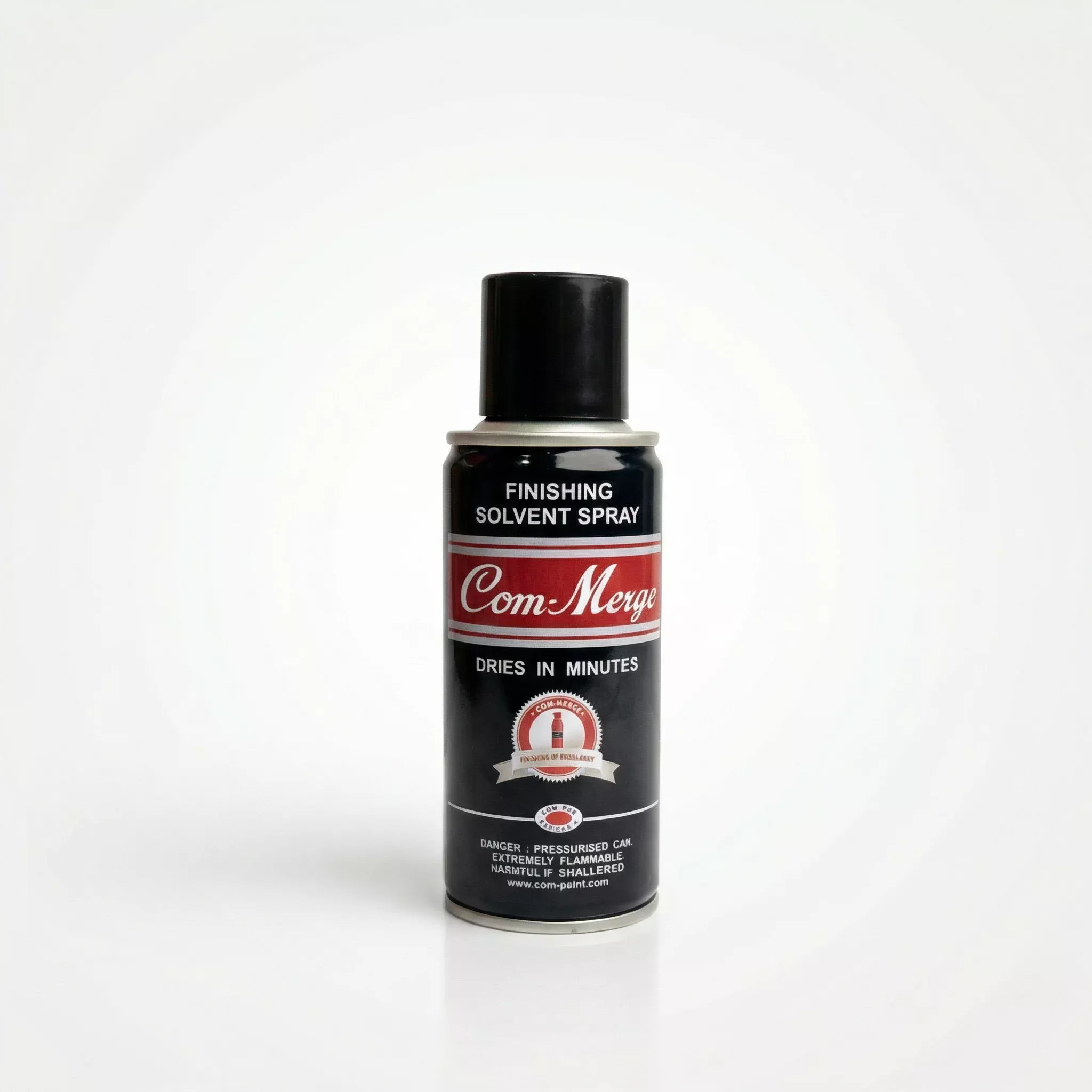
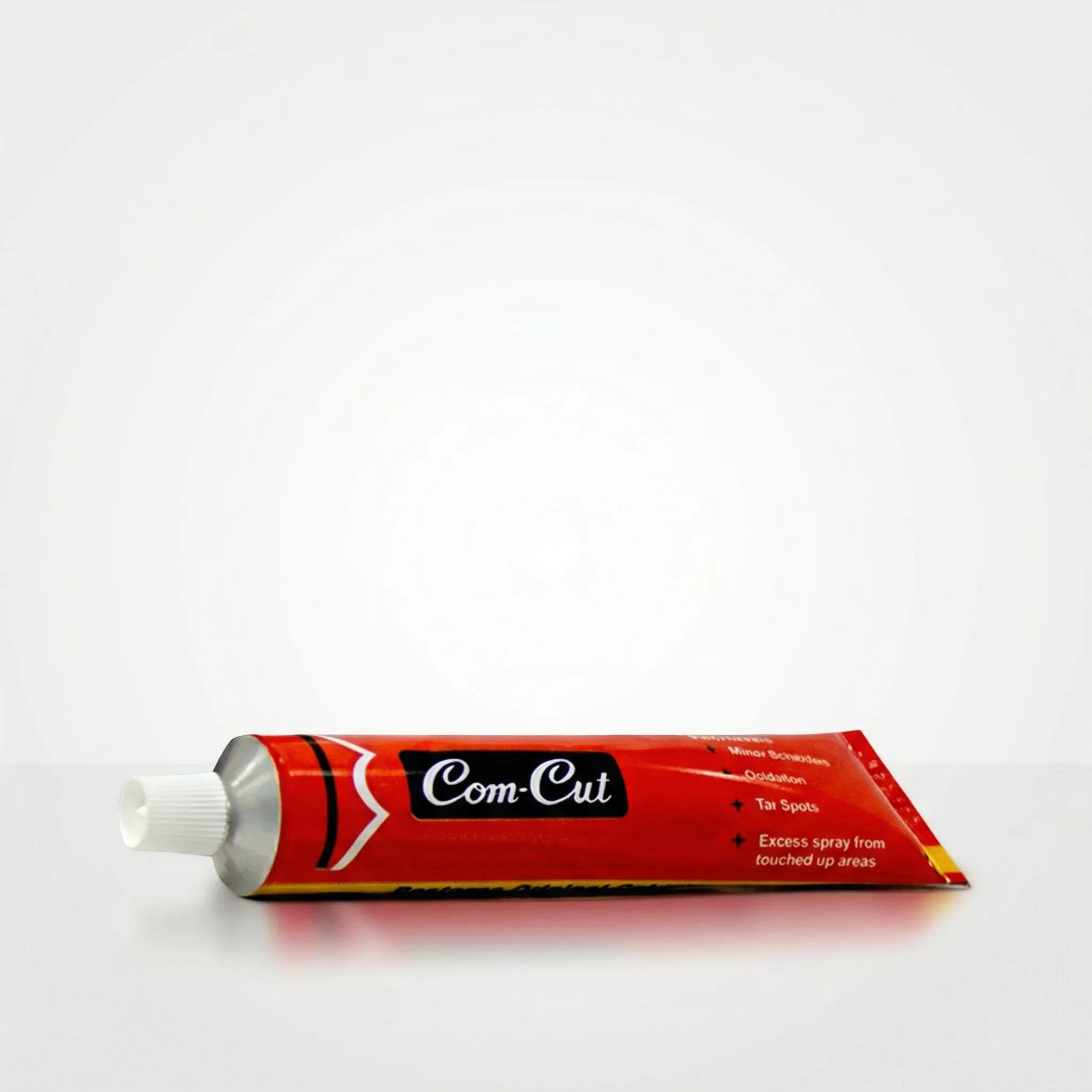
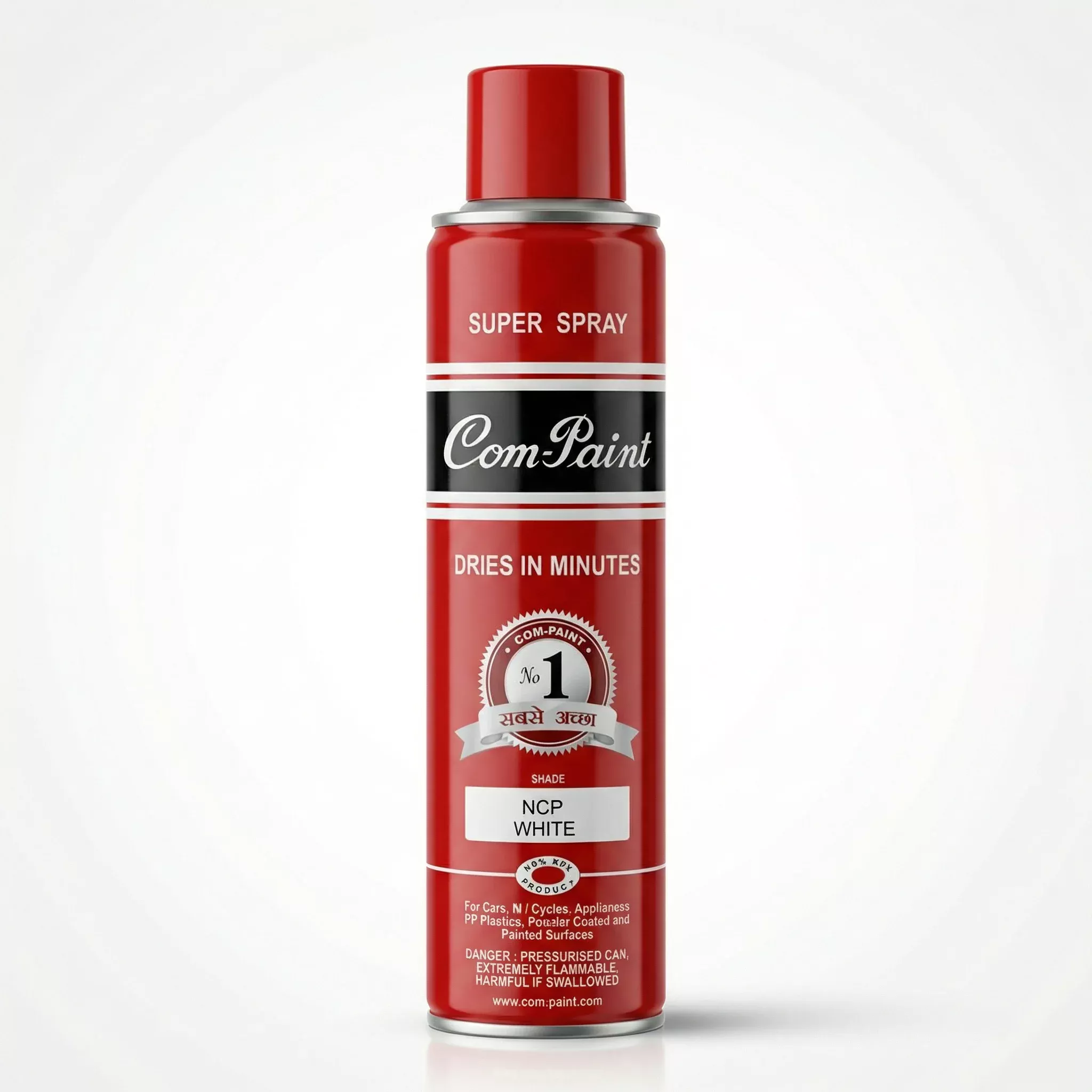
Com-Paint offers different touch-up and scratch-care solutions, including a car and bike scratch remover, Com-Fill scratch filler and vehicle-specific spray paint/value-pack solutions. The key is to match the product to the damage instead of using the same product for every scratch.
Why Choosing the Right Scratch Repair Product Matters
A scratch is not always just a scratch. Automotive paint systems normally contain multiple layers, and the repair method should be selected according to which layer has been affected. A surface scuff can often be treated without repainting, while a deeper scratch may require filling, sanding, primer, colour-matched paint and a protective clear coat.
- Light surface mark: often suitable for a scratch remover or polish-type product.
- Paint transfer/scuff: a dedicated scratch or scuff remover may help restore the surface without repainting.
- Fine paint scratch: a paint pen or touch-up product can be useful for precise application.
- Paint-layer damage: colour-matched touch-up paint or spray paint may be required.
- Deep scratch exposing primer or metal: preparation, primer and paint are usually needed; professional repair may be preferable.
Types of Car & Bike Scratch Repair Products
1. Car & Bike Scratch Remover
A scratch remover is designed for surface-level marks, scuffs and paint transfer. It is useful when the original paint is largely intact and the damage is more like a mark on the surface than a missing paint layer.
Com-Paint’s Car & Bike Scratch Remover is positioned for light to medium surface marks and paint transfer, with a simple DIY application. It is especially relevant when the user wants a quick solution without repainting.
2. Car Scratch Remover Pen / Paint Pen
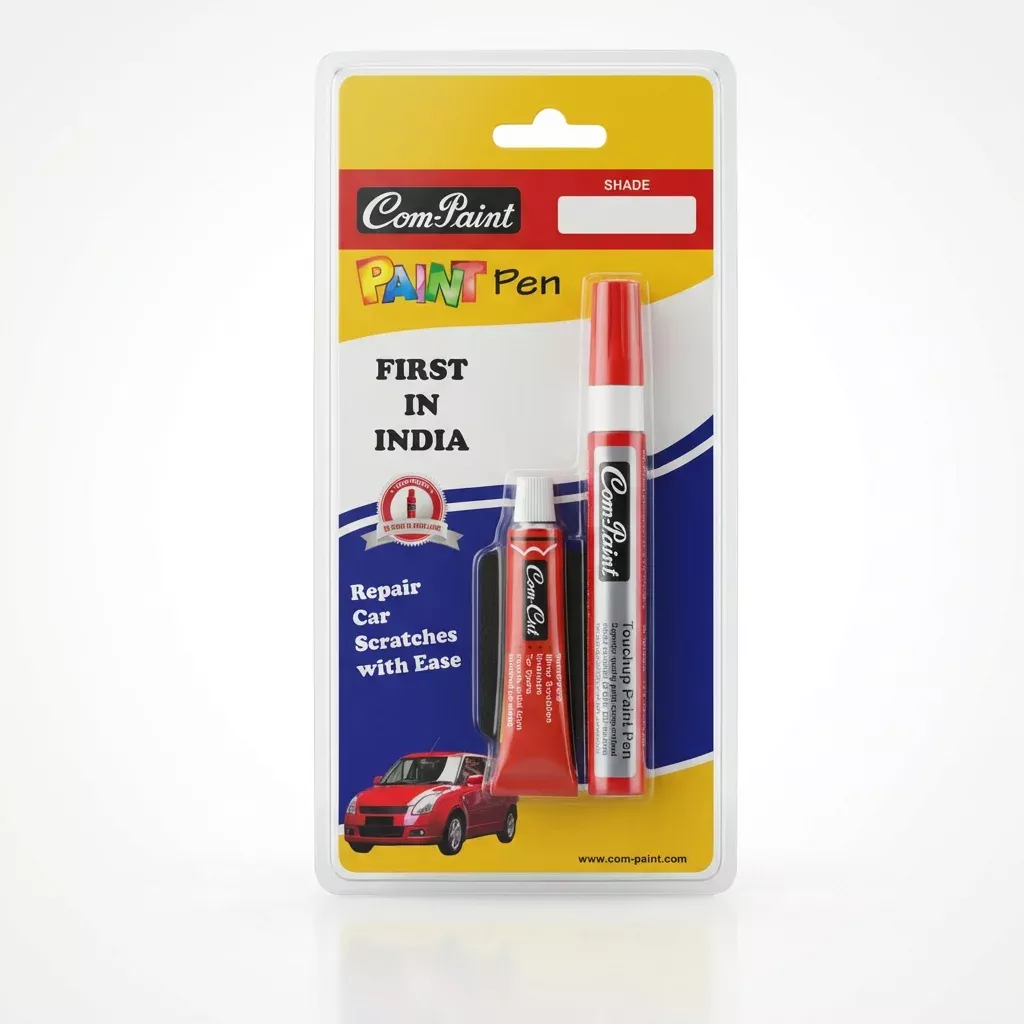
A car scratch remover pen or automotive paint pen is useful for narrow scratches, tiny chips and small touch-up areas. The main advantage is precision: you can place a small amount of colour exactly where it is needed.
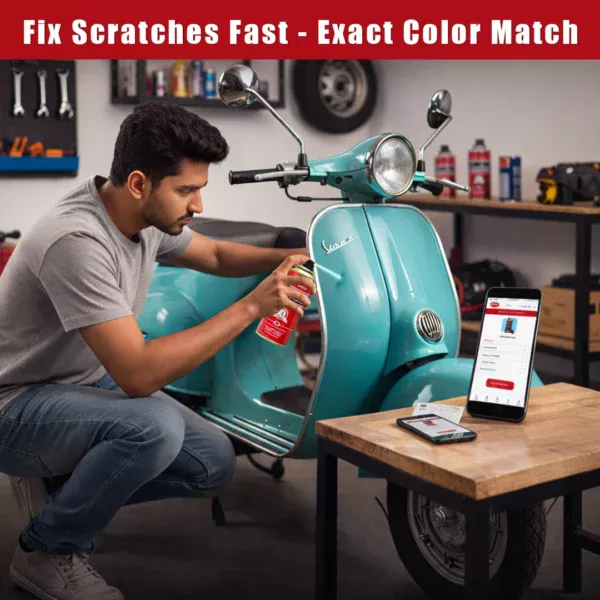
Do not choose a pen simply because the colour name looks similar. Automotive shades can vary by manufacturer, model, year and paint code. Always verify the vehicle shade before applying paint.
3. Scratch Filler
If a scratch has created a small groove or uneven surface, a filler can help level the area before paint is applied. Com-Paint’s Com-Fill is a body filler paste intended for filling scratches before touch-up.
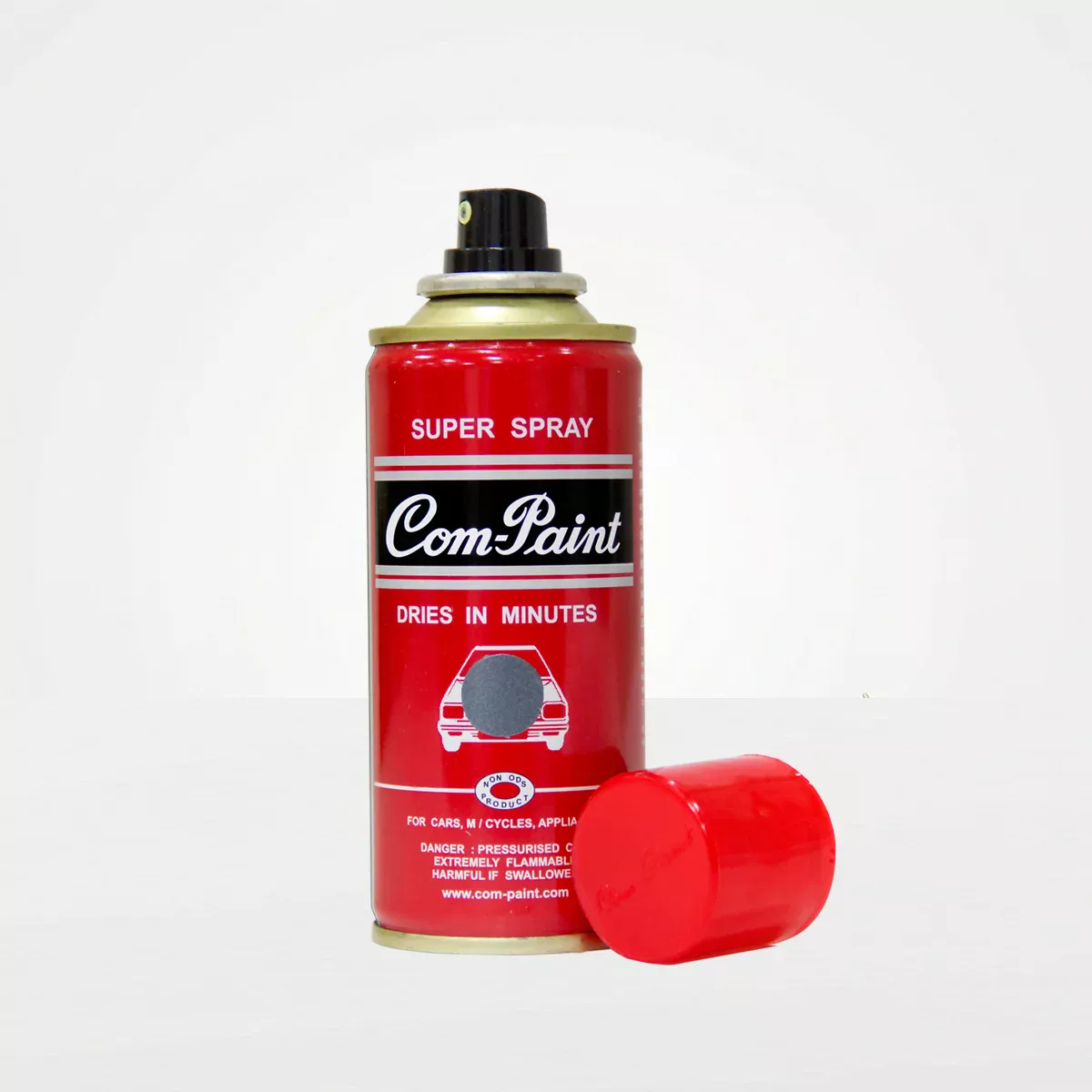
4. Touch-Up Spray Paint
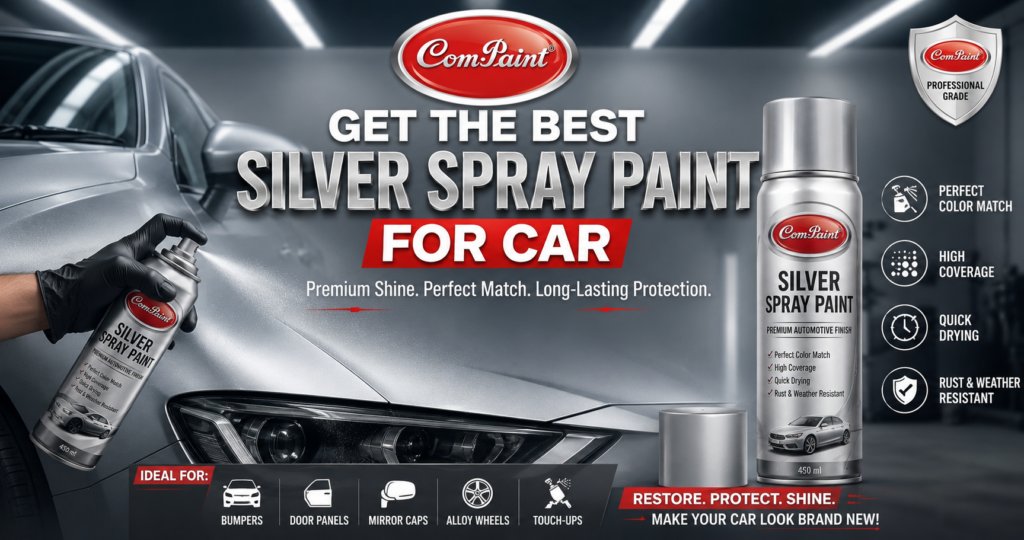
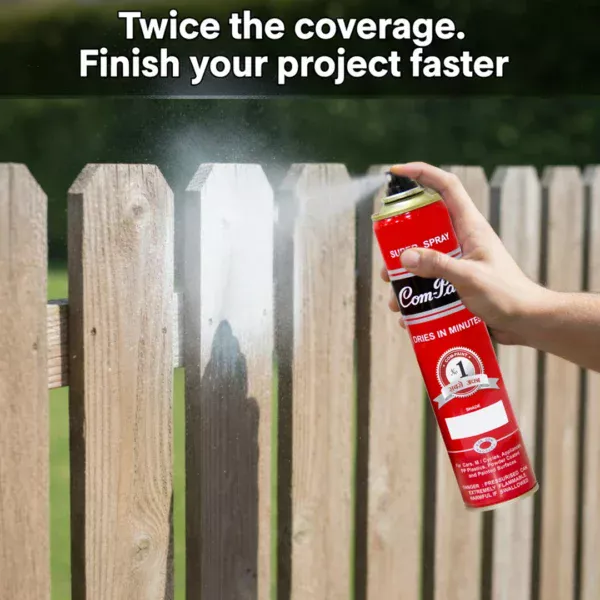
Spray paint is more suitable when the damaged area is larger than a tiny chip or line. A properly matched automotive spray paint can provide more even coverage than trying to build up a large area with a pen.
5. Primer and Clear Coat
Primer can help when the original coating has been removed and the substrate needs preparation. A clear coat may then be used in systems designed for it to improve gloss and protection. Always follow the specific product instructions and compatibility requirements.
How to Identify the Depth of a Car or Bike Scratch
Light Surface Scratch
If the mark is very shallow and the original colour is still intact, it may be limited to the clear coat or surface contamination. A scratch remover or suitable polishing approach may improve its appearance.
Paint Scratch
If you can see a different colour or a clear line where the vehicle paint is missing, the base paint may be damaged. This is where colour-matched touch-up paint becomes more relevant.
Deep Scratch
If primer, bare metal or plastic is visible, the repair is more involved. Simply wiping on a scratch remover generally will not recreate missing paint. Surface preparation and a proper touch-up system may be necessary.
How to Repair a Car Scratch at Home: Step-by-Step
Step 1: Wash and Dry the Area
Clean the panel with an appropriate vehicle-safe cleaning method. Remove dust, mud, grease, wax and road grime. Allow the area to dry completely.
Step 2: Inspect the Damage
Look at the scratch in good lighting. Decide whether it is a surface mark, paint scratch or deep damage. This decision determines the product you should use.
Step 3: Choose the Correct Product
Use a scratch remover for suitable surface marks, a paint pen for small precise touch-ups, filler for suitable grooves, and spray paint for larger paint-loss areas.
Step 4: Test Before Full Application
If possible, test the product in a less visible area or on a suitable test surface. This helps you understand colour, coverage and drying behaviour before working on the visible panel.
Step 5: Apply Thin, Controlled Layers
Avoid flooding the scratch with product. Thin layers are generally easier to control and reduce the chance of a raised or uneven repair.
Step 6: Allow Proper Drying Time
Do not touch, wash or aggressively polish the repaired area before the product has dried and cured according to the manufacturer’s instructions.
Step 7: Finish and Protect
Where the selected repair system requires it, apply clear coat or the recommended finishing step. Avoid aggressive polishing until the paint is fully cured.
Car Scratch Remover vs Car Scratch Repair Paint: Which One Should You Use?
| Damage Type | Suitable Product | Why | DIY Level |
| Surface scuff / paint transfer | Scratch remover | Removes or reduces surface marks without repainting | Easy |
| Tiny chip / narrow scratch | Paint pen / touch-up paint | Precise application to a small area | Easy–Moderate |
| Small groove | Scratch filler + paint | Levels the surface before colour application | Moderate |
| Larger paint-loss area | Touch-up spray paint | Provides broader and more even coverage | Moderate |
| Deep dent / major panel damage | Professional body repair | Requires bodywork and professional refinishing | Professional |
Common Mistakes to Avoid
- Choosing paint only by a generic colour name such as black, white or silver.
- Applying a thick layer in one go.
- Painting over wax, grease or dust.
- Skipping preparation on deeper scratches.
- Touching the repair while it is still wet.
- Expecting a scratch remover to rebuild missing paint.
- Using household DIY hacks as a substitute for a proper automotive repair system.
How to Choose the Best Scratch Repair Product in India
- Check the scratch depth first.
- Confirm the exact vehicle colour or paint code where possible.
- Choose a product designed for automotive surfaces.
- Check whether the product is intended for cars, bikes, plastic parts or painted metal.
- Read application and drying instructions before purchase.
- Consider whether you need a single product or a complete touch-up kit.
- For larger/deeper damage, compare DIY cost and effort with professional repair.
Why Com-Paint Can Be Considered for DIY Scratch Repair
Com-Paint’s online range is focused on automotive and touch-up use. Its website provides vehicle make/model/year selection for shade matching and offers products such as car and bike scratch remover, paint pen kits, scratch filler and vehicle-specific spray paint/value packs. This makes it possible to choose a repair approach based on the size and type of damage rather than relying on a generic colour alone.
Explore the available range at https://www.com-paint.com/.
Frequently Asked Questions
What is the best scratch repair product for cars?
There is no single product for every scratch. Use a scratch remover for suitable surface marks, a paint pen for tiny chips and narrow scratches, and colour-matched touch-up spray paint when a larger area has lost paint.
Can a car scratch remover remove deep scratches?
A surface scratch remover cannot replace paint that has been removed. Deep scratches may require filler, primer, touch-up paint or professional repair depending on the damage.
Does a car scratch remover pen really work?
A paint pen can be useful for small chips and narrow paint scratches when the colour is correctly matched and the surface is properly prepared. It is not intended to repair dents or large areas of missing paint.
Can I repair bike scratches at home?
Minor surface marks and small paint chips can often be treated as a DIY project. Larger scratches, damaged plastic, dents or exposed metal may need more extensive preparation or professional repair.
Should I use spray paint or a scratch remover?
Use a scratch remover when the original paint is still intact and the issue is mainly a surface mark or transfer. Use touch-up spray paint when paint is actually missing from a larger area.
How do I choose the correct car paint colour?
Use the manufacturer’s paint code or a reliable vehicle make/model/year matching system. Generic colour names are not enough for an accurate automotive match.
Can toothpaste permanently repair car scratches?
Household products are not a reliable replacement for automotive scratch-repair products. The appropriate solution depends on the scratch depth and the vehicle’s paint system.
When should I visit a professional body shop?
Consider professional repair for deep scratches, dents, cracked panels, large paint-loss areas, corrosion, or when an invisible colour blend is required.
Conclusion
The best scratch repair product for cars and bikes depends on the damage, not simply on the product’s popularity. Start by identifying the scratch depth, then select a scratch remover, paint pen, filler or spray paint as appropriate. For Indian vehicle owners looking for DIY touch-up solutions, Com-Paint provides a range of automotive scratch and paint products designed around different repair needs.